“Remembrance is not a violation”: Ukrainian Olympic athlete Heraskevych banned for helmet honoring fallen athletes
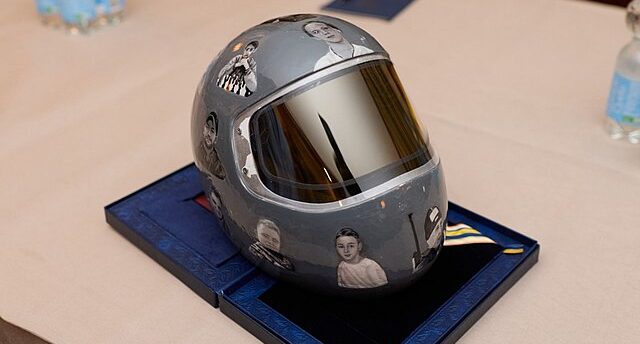
Ukrainian skeleton slider Vladyslav Heraskevych has been banned from competing in the Winter Olympics held in Italy after his helmet was deemed to be breaking Olympic law. The helmet was decorated with artworks paying tribute to his fellow Ukrainian athletes who had been killed during the Russian invasion.
After two days of discussion and resistance to the International Olympic Committee (IOC), Heraskevych was disqualified on the morning of February 12.
The IOC stated that the helmet “does not comply” with the ‘athlete expression’ guidelines, which are included in Olympic law, and that Heraskevych “did not consider any form of compromise” prior to his disqualification.
The IOC’s final decision was strongly disapproved of by both Heraskevych’s international teammates and Olympic athletes in other events, who voiced their support for the slider.
Acts [of support] have protested the IOC’s policing of athlete expression
Lizzy Arnold, Team GB’s two-time Olympic skeleton gold medallist, reported to BBC Sport that wearing the helmet “was an act of memorial and incredibly emotionally important to him” and believed that “the IOC owe him an apology.”
In a show of support, Ukrainian alpine skier Dmytro Shepiuk held up a note stuck to his glove, which read: “UKR heroes with us” after competing. Similarly, Ukrainian luger Olena Smaha wore a glove reading: “Remembrance is not a violation.”
Such acts have protested the IOC’s policing of athlete expression, with Heraskevych himself calling the IOC’s reasoning into question.
“Some [other helmets] had national symbols, that is also expression,” Heraskevych noted in a statement to the BBC, “[but] their helmets weren’t checked, and they were allowed to compete.”
IOC spokesperson Mark Adams claimed that wearing kit which honours those killed in war could create a “field of expression”
Despite being an inoffensive memorial, the IOC’s rules outlawed the helmet under rule 40.2 of the Olympic Charter, which stresses the importance of the guidelines set by the IOC Executive Board. These guidelines state the Olympic Games as “neutral”, and an event which “must be separate from political, religious, and any other type of interference.”
The responding shock and disapproval target the IOC’s decision to bar the memorialisation of athletes from the arena they will never step back onto.
Heraskevych has expressed such distress for this reality on his social media, accompanied by several images of the helmet leading up to his disqualification.
However, IOC spokesperson Mark Adams claimed that wearing kit which honours those killed in war could create a “field of expression” which exposes the Olympics to “chaos.”
[I wanted to] honour [those who have fallen] and their families
Vladyslav Heraskevych to the BCC
This apolitical stance was criticised by Ukrainian president Volodymyr Zelenskyy on X, who accused that “sport shouldn’t mean amnesia”, and that the Olympic movement “[should] not play into the hands of aggressors.”
Heraskevych told the BBC that he simply wanted to “honour them and their families”, and that the subsequent ban had left him with a feeling of “emptiness.”
Following the killing of 660 Ukrainian athletes and coaches by Russia since the invasion began, Heraskevych has been supported for his continued dedication to Ukraine, even in the aftermath of his disqualification.
Voicing pride for Heraskevych’s resistance, Zelenskyy awarded the athlete the Order of Freedom, reassuring him, as reported by The Guardian, that “remembrance is not a violation.”
On the day of his disqualification, Heraskevych posted a photograph of himself wearing the helmet on X. The image was accompanied by the simple caption “this is [the] price of our dignity”, a powerful assertion of Ukrainian perseverance even in times of injustice.
Comments