Reality or fiction?
As we look back, 2025 was an unforgettable year with incredulous events like the so-called ‘Pope Games’ (aka the internet’s fascination with the election of the new Pope) and the Louvre robbery, a heist so unbelievable it had people questioning if it was a promo for the upcoming Now You See Me movie. However, along with these amusing events, it’s important to reflect on the year’s place in history and how life can often mirror even darker aspects of literature.
Why does the news feel more and more familiar? The deja vu is growing for many young people who grew up with the dystopian fiction of the 2010s, as our own lives begin to seem like the fulfilment of a dark prophecy.
One has to look no further than our own screens to see the increasing extravagance of events like Jeff Bezos’s wedding and the Met Gala, at the same time as growing crises of injustice and poverty worldwide; many have drawn acute parallels to Suzanne Collins’ depiction of the Capitol citizens in The Hunger Games series, not only due to their lavish, somewhat absurd fashion, but also these billionaires’ own complicity in causing these issues, with companies like Amazon being guilty of huge carbon emissions, longstanding exploitation of workers in third-world countries, etc. Collins herself stated: “Telling a story in a futuristic world gives you this freedom to explore things that bother you in contemporary times.“; and indeed, despite the first of the series being published in 2008, the issues of class inequality and struggle she explores rang truer than ever in 2025.
We’re also seeing increasing similarities to literary warnings about fascism in our current political climate, mirroring the oppressive regimes depicted in dystopian series
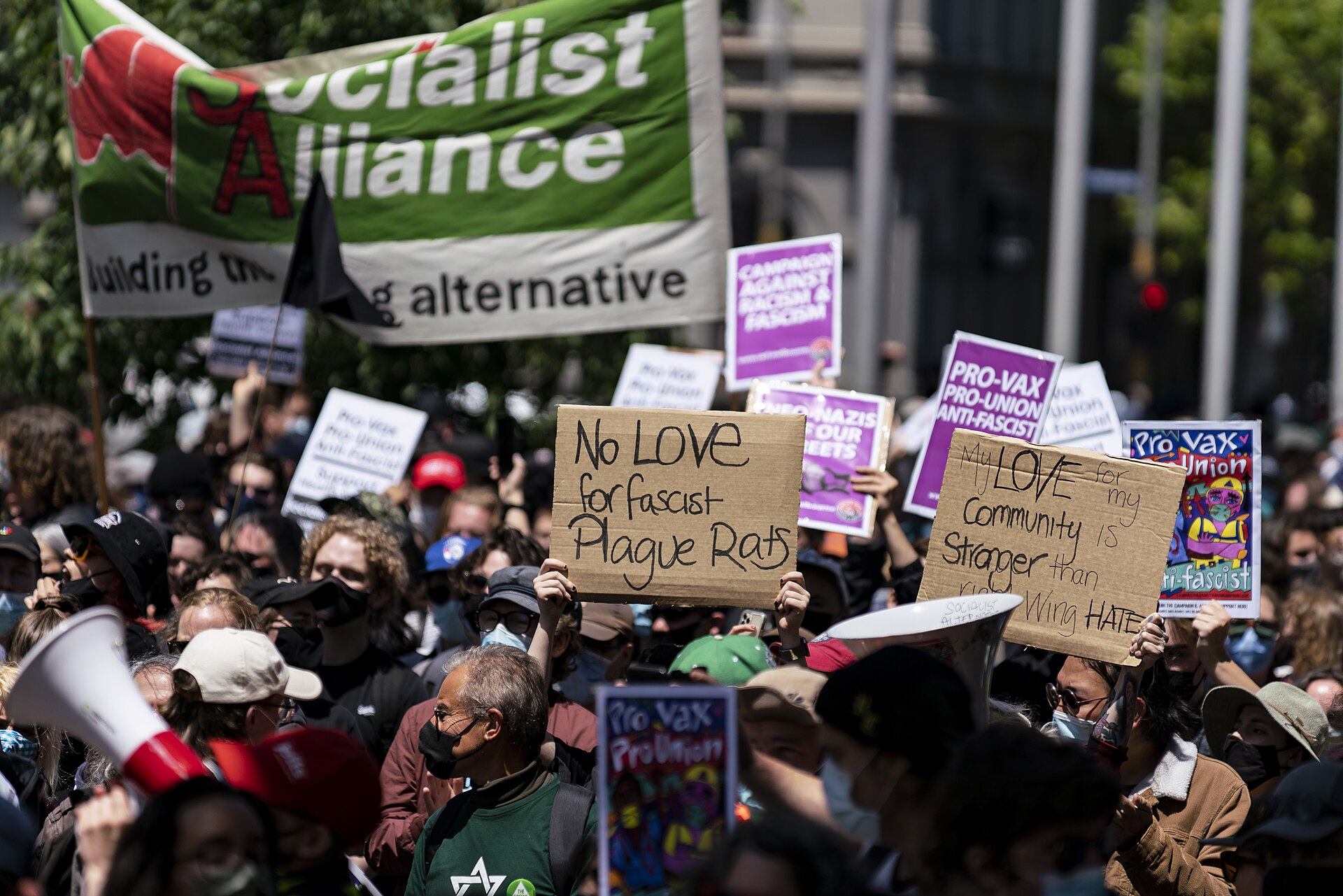
At the same time, we’re also seeing increasing similarities to literary warnings about fascism in our current political climate, mirroring the oppressive regimes depicted in dystopian series such as The Hunger Games, Divergent, and The Maze Runner, to name a few. For example, we are constantly reminded of the cults of personality surrounding far-right political figures like Donald Trump, Nigel Farage and Tommy Robinson, not to mention Elon Musk, who is on track to become the world’s first trillionaire (a dystopian concept in its own right), literally doing a ‘Nazi salute’ at Trump’s inauguration.
The current uncertainty and hopelessness of the political as well as the economic climate have led to nostalgia and a longing for ‘simpler times’, even among the younger generation who never experienced this time themselves, resulting in a significant increase in conservative values. This can be seen in the increased promotion of gender essentialism on TikTok, with ‘alpha males’ like Andrew Tate and ‘trad wives’ gaining larger platforms. This apparent regression in values is reminiscent of Atwood’s imagined future in The Handmaid’s Tale, with familiar themes like oppression, female subjugation, and resistance.
And of course, no dystopia is complete without its technological advancements. The rise of AI has led many to compare our current reality to a science fiction novel; in 2024, after quitting his role at Google, AI ‘godfather’ Geoffrey Hinton made a speech in which he warned of the dangers of profit-driven corporation’s AI usage; many have referred to this as our real life ‘warning from scientist’ so often seen in science fiction media. The reality imagined by Frank Herbert in the recently re-popularised 60s science fiction novel Dune of ‘thinking machines’ uprising against humanity suddenly feels eerily feasible.
Along with online echo chambers, [convenience culture and a lack of critical thinking] have led to a widespread lack of media literacy, making people susceptible to propaganda and biases within the news
On an individual level, the pervasive rise of accessible AI like ChatGPT is contributing to modern-day convenience culture, meaning a lack of real, and especially critical, thinking. Along with online echo chambers, these factors have led to a widespread lack of media literacy, making people susceptible to propaganda and biases within the news, as seen in reports about the ongoing genocide in Gaza. The use of propaganda is widely featured in many dystopian series; notably, the most recent Hunger Games novel Sunrise on the Reaping focuses largely on distortion as a means of control, leading many to dub it a caution against our current media landscape; this is especially relevant considering she herself has said she only writes when she ‘has something to say’, reminding us of the power literature can have, especially in such disorienting, tumultuous times.
However, we can also find hope and strength in these reminders. Zohran Mamdani’s historic win as the first South Asian Muslim mayor of New York showed widespread frustration and disillusionment, especially amongst the younger generation, who are tired of a lack of political representation. Just like the ‘revolutions’ we see in dystopian media, this can serve as a beacon of hope for change, a reminder that history can still be created.
Comments