Post Villain Stress Disorder: No one considers the aftermath of being the bad guy
Actors are always thrilled to take on a new, villainous role. Whether it is to diversify their rolodex of character archetypes, or they simply want a challenge in playing something uniquely dark, it is usually a role that many take on with great excitement and enthusiasm.
In nearly all interviews post-antagonist, there is a commonality that most actors seemed to enjoy playing someone more complex and mysterious, since it allows for an experimentation with personality and a deep dive into the subconscious of what makes someone or something truly evil. And as we all know, everyone loves a good baddie, and at times, ironically, they are the main takeaway from a film. Sometimes, being known as the villain is better than being the hero, with some actors embracing the deviancy that comes with playing someone outside the law, or even inhuman.
But no one stops to consider the negative impacts of playing troubled characters, and what it does to the actor who has to embody this caricature for months at a time for the sake of our enjoyment. Of course, actors are trained to come in and out of roles at will, but that doesn’t necessarily mean that the remnants of their character, and what they did to become them, goes away.
Recently Michael B. Jordan told People Magazine that he went to therapy after playing one of his most iconic villain roles in Black Panther. He said that the role “kind of stuck with me for a bit”, and that he “went to therapy and talked about it. Found a way to kind of just decompress, I think at that point still learning that I needed to decompress from a character”. He later went on to say that the experience as a whole “spiralled into a bigger conversation and self-discovery” and that he firmly believes that therapy is something that everyone, especially men, should pursue.
Ledger was affected by the physical strain of his role, which then went on to negatively impact his mental health, all in the name of perfection
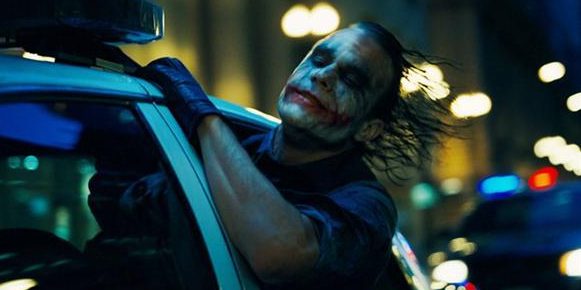
Michael B. Jordan is not the first to openly talk about the darker side of acting, as we have seen in the past with beloved actors such as Heath Ledger, who sadly passed away after his role as the infamous villain the Joker in Nolan’s The Dark Knight. Looper reported that Heath Ledger “pushed himself physically and mentally further than he ever had for a role” to give his own rendition of the beloved comic book villain. It left “him exhausted and sleep deprived”, which caused the insomnia that sadly “contributed to his premature death when the 28-year-old actor accidentally overdosed on prescription sleeping medication before the film’s release”. Ledger was affected by the physical strain of his role, which then went on to negatively impact his mental health, all in the name of perfection, in hopes he would leave his own mark on the character.
Much like these two actors, Bill Skarsgård has expressed his difficulties and fears when playing Stephen King’s most infamous monster Pennywise, from his hit book It. Skarsgård has told the New York Times that unlike any role he has played, Pennywise was the one that drained him the most. He said, “Everything I did took 100 percent of my energy. It was by far the most exhausting character I’ve ever done, physically and mentally”, and has spoken about how he was afraid to scare the child actors on set, as he attempted to separate character from role for those around him. He said “I think I’ve gone through every sort of emotion on the way of prepping for this character–sort of terror and doubt and excitement”, and that in the future he was worried that this very prominent role would hold him back, stating: “I wouldn’t want to be associated with one character because I want to be able to do different roles.”
For these actors, there is a physical and mental exhaustion that comes from playing someone so far from their own personalities
It seems that for these actors, there is a physical and mental exhaustion that comes from playing someone so far from their own personalities, having to re-write and re-wire themselves to fit the mould of the role, and then going into a type of rehab just to feel like themselves again. Skarsgård brought up the interesting notion of being too recognised through one’s iconic performance to the point that it leaves you type-casted, which we have seen with many actors who appear as the same type of character in every movie with no chance to expand on their repertoire.
In general, everyone loves the charismatic villain. They are what usually attracts the masses, the audience being fascinated and captivated by their immorality and subversive modes of thinking, but after knowing about the brutal physical and psychological after-effects of these beloved roles, maybe we should consider how these characters are created, and the prices that are paid to bring to life the horrors that we enjoy on the silver screen.
Comments