No Strings Attached: Puppetry in Theatre Over the Ages
The art of puppetry in mainstream media is often limited to the occasional Muppet movie or episodes of Sesame Street. However, when looking at the history of puppetry in theatre, the two seem practically synonymous. From the very birth of theatre, puppets have been used on the stage to represent and creatively illustrate non-human characters, and, as theatre technology has developed, so too has the complexity of the puppets themselves. The way puppets are used also differs between shows, and can vary from simply embodying a non-human character on stage, to presenting a different tone to the production entirely.
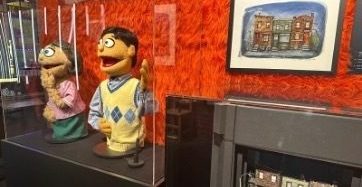
Starting out simple, and just in time for its first ever West End revival, Avenue Q plays on those aforementioned tropes of Sesame Street, albeit with a slightly more adult tone. The show uses basic hand puppetry to control some of the main cast members, controlling their mouths and arms. Yet, while it may stick to simple hand puppets, the show combines this with mature subject material to make for one of the most unique experiences you can get in a theatre – where else can you hear puppets singing about such pressing topics as racism, pornography and sexuality? It beat Wicked for the ‘Best Musical’ Tony Award for a reason.
This moment worked to terrify audiences, and the use of puppetry for shock value is certainly a trend that has continued to this day
On a more family-friendly note, The Lion King takes the initial idea of hand puppetry and elevates it to a new level, stunning audiences with complex, multi-person puppets that cover every animal in the Savannah. From birds flying over your heads to elephants that brush past you in the aisles, the puppetry is what keeps audiences amazed and is certainly one of the main reasons it is the most successful Disney stage show. A special highlight should also be given to the puppetry used in creating Timon, later repurposed for the creation of Olaf in Frozen. Here, the actor uses their full body to create the character in front of them, from arms to mouth and even by moving their legs. A spectacular feat of theatrical engineering, this trick made it seem as though Timon and Olaf were actually moving and talking on stage, heightening the immersion of the show.
The use of puppetry to create a more immersive audience experience has been prioritised for decades and it was the motivation behind the most famous theatre puppet of all time – Audrey II in Little Shop of Horrors. The production involves a bloodthirsty plant reminiscent of a Venus flytrap that slowly grows and changes form during the show. It first starts as a small hand puppet of a plant in a can, grows into a puppet that uses a performer’s whole arm, moves to a full body puppet of a plant that sings a full musical number and, finally, ends with a large mouth puppet operated by several people that takes up a significant portion of the stage. In the 2003 Broadway revival the puppet was modernised even further, using a hydraulic lift to extend the plant mouth past the stage and snap at audience members during the dystopian final number. This moment worked to terrify audiences, and the use of puppetry for shock value is certainly a trend that has continued to this day, with the large sandworm puppet in Beetlejuice jumping out from the wings to give a good old fashioned scare.
A puppet doesn’t necessarily need size or a jazzy singing voice to provide an impact and be memorable – simplicity can often be just as important
Speaking of puppets providing shock value, the 2013 musical, King Kong, created a silverback gorilla to use in the show, and to say the puppet was large would be an understatement. Towering over the stage and audience at over 6 metres tall, weighing over a tonne and needing to be operated by 35 puppeteers simultaneously, the King Kong puppet is to this day one of the most complex ever created, even beyond the theatre realm.
However, a puppet doesn’t necessarily need size or a jazzy singing voice to provide an impact and be memorable – simplicity can often be just as important. No show perhaps conveys this better than War Horse. Two performers work in tandem onstage to operate a horse puppet, allowing it to seamlessly interact with other actors onstage as though it were truly real. This, combined with the time-tested story, certainly explains its sweeping success at the Tonys and Oliviers, alongside the many international productions since its debut.
The importance of puppetry in theatre is often underestimated, but more often than not the two go hand-in-hand to create the vast and complicated experiences you see onstage
The importance of puppetry in theatre is often underestimated, but more often than not the two go hand-in-hand to create the vast and complicated experiences you see onstage. Their contributions can be more subtle, like the expressions of the Clock of the Time Dragon above the set of Wicked, or provide comedic value, like Milky White the Cow in some productions of Into The Woods. Regardless, puppets are often essential to what makes theatre possible in the first place, and can even have influence in ways you might not expect. In the 2021 West End revival of Cabaret, despite the production not using physical puppets at all, Eddie Redmayne’s interpretation of the Emcee character uses marionette-like mannerisms to convey his role as a quite literal puppet for rising fascism across Germany.
Puppets can be creepy, funny, adorable and so much more depending on their purpose in a production, and they truly are the backbone of some of the most famous shows of all time across theatrical history. From gigantic gorillas to bloodthirsty plants and now even Paddington Bear, they expand what is possible on a stage, and show no sign of slowing down any time soon. Only the puppets from Avenue Q could ask a theatre audience for more money half way through an expensive Broadway show and get away with it. At least it all went to charity…
Comments