Michael On The Move: Exploring Bhutan
Hello all, and welcome back to the next edition of this column. I’m writing this one from the best building on campus, the FAB, while procrastinating instead of getting on with my work. I was a bit stuck on which country to focus on this time, so I turned to a friend for inspiration and they suggested Bhutan, so here we go…
Bhutan is a landlocked country in South Asia, situated in the Eastern Himalayas. It has a population of under one million and a territory covering just 38,394 square kilometres. It is relatively small but rich in history and culture. Evidence suggests that Bhutan was inhabited as early as 2000 BC, with Buddhism introduced to the region in the mid-7th century AD. If you’re planning a visit, I’d recommend travelling in spring or autumn, when the weather is drier and more mild.
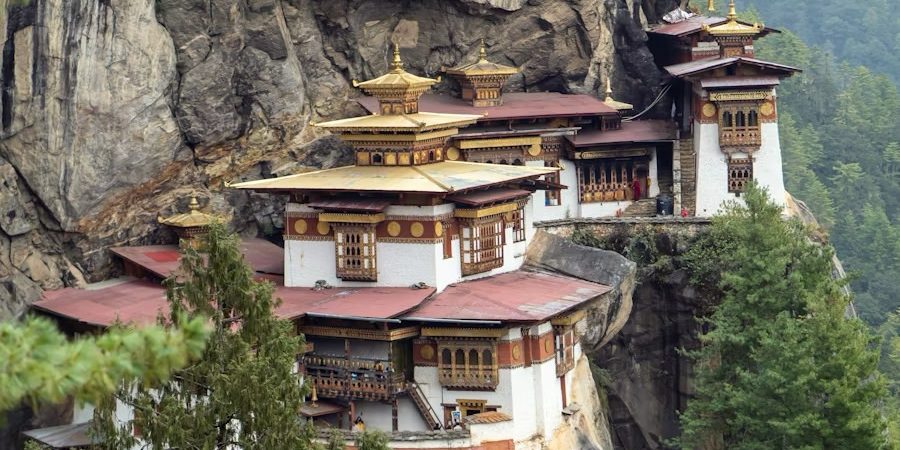
Once you reach the monastery, you’re rewarded with breathtaking panoramic views of Bhutan’s lush, mountainous landscape
One of the top things to do in Bhutan is to visit the Tiger’s Nest Monastery. This sacred Buddhist site is famously perched on the edge of a 3,000-metre-high cliff in Bhutan’s Paro Valley. Legend says that Guru Rinpoche flew on the back of a tigress to subdue the local demon, before meditating in a cave there for three months. Reaching the monastery requires a good level of fitness, as the steep 8 kilometre hike takes two to four hours. However, the effort is more than worth it. Once you reach the monastery, you’re rewarded with breathtaking panoramic views of Bhutan’s lush, mountainous landscape. Visitors can also enter the monastery itself, just remember that photography is not permitted inside.
This Tshechu stands out for its deeply spiritual atmosphere, intimate setting, and graceful performances
While planning your trip to Bhutan, it’s also worth trying to time your visit to make sure to visit a Tshechu. These vibrant, multi-day religious festivals are held annually in different districts to honour Guru Rinpoche, the saint who introduced Buddhism to Bhutan. These take place on the tenth day of the lunar month, based on the Tibetan calendar rather than the Gregorian one, meaning the dates vary each year. Visitors can expect colourful masked dances, intricate costumes and age-old traditions that bring Bhutanese culture to life.
One of the upcoming Tshechu is the Talo Tschecu, a three-day festival held at Talo Monastery, perched around 2,800 metres above the Punakha Valley. This Tshechu stands out for its deeply spiritual atmosphere, intimate setting, and graceful performances. Visitors can enjoy a close-up experience of the sacred Cham mask dances, clown performances and a classical Bhutanese dance native to Talo. One of the festival’s highlights is the Talo Zungki beauty contest, where local women take part dressed in traditional kira, celebrating cultural elegance. Just remember to bring warm layers, as the high altitude can be chilly, and always ask before taking photographs.
Bhutanese cuisine is known for its bold, spicy flavours with staples such as red rice, buckwheat and maize forming the base of many dishes
Another major reason Bhutan is worth visiting is for its food. Bhutanese cuisine is known for its bold, spicy flavours with staples such as red rice, buckwheat and maize forming the base of many dishes. Chillies and cheese are consumed daily, and the national dish, Ema Datshi, perfectly captures this combination. Made from hot chilli peppers and cheese, the stew is intensely spicy yet creamy, with the richness of the cheese balancing the heat of the chillies. Other popular dishes include: Phaksha Paa (pork with chilies), dried yak or beef and momos (steam dumplings). These are all widely available and well worth trying! And with dinner for two costing around £10, it is worth going and trying a range of restaurants while visiting the country.
So, I would definitely recommend a trip to Bhutan to experience its truly unique culture. Exploring monasteries nestled against breathtaking landscapes is something that feels distinctly Bhutanese, as are the vibrant festivals that allow you to fully immerse yourself in local traditions. And not to mention the food, some of which you most certainly haven’t tried before, like dried yak. If experiencing something like this sounds up your street, why not consider booking a trip to Bhutan! I hope you have enjoyed reading about Bhutan as much as I enjoyed learning about it while researching for this column!
Until next time…
Comments