A look back at Live Aid: The concert that changed the world…
In July 1985, Bob Geldof and Midge Ure’s conception for two simultaneous concerts in aid of the 1983-1985 Ethiopia Famine came to fruition. Featuring over 70 acts performing more than 16 hours of music across the two venues (Wembley Stadium, London, and JFK Stadium, Philadelphia) Live Aid is probably the most well-known, ambitious, and largest-scale charity music event of all time. It reached an audience of 1.5 billion people, including those in the stadiums, and was broadcast across an estimated 150 countries. On the day, the concert raised £40 million, the equivalent of approximately £100 million today, and the Band Aid Charitable Trust (BACT), established after the release of ‘Do They Know It’s Christmas?’ in 1984, has continued to provide relief for Ethiopian famine, raising over £140 million between 1984 and 2022.
It was at the moment the video was played, during the climax of ‘Heroes’, that the phone lines “melted”
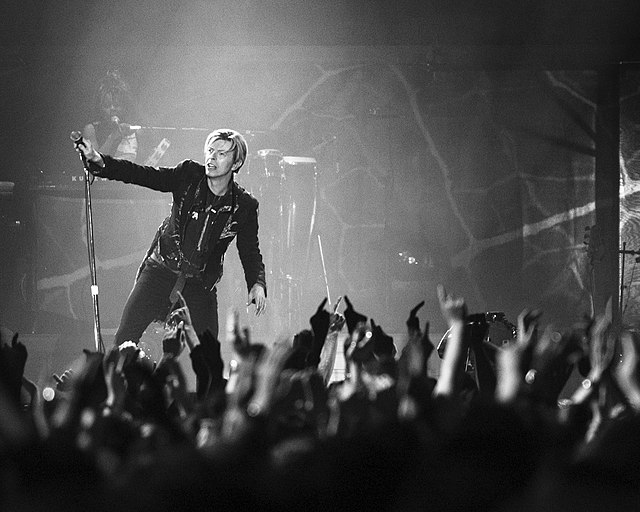
Notable performances from the concert included Queen, David Bowie and, impressively, Phil Collins‘ appearance at both venues, the only artist to do so, having taken two helicopters and a Concorde flight to make it from London to Philadelphia. Queen, still largely considered to have “stolen the show” over 40 years on, were late additions to the line-up, as Geldof believed that they had already “peaked”. Due to Queen’s show-stopping performance, and subsequent presentations of it (such as in the 2018 biopic, Bohemian Rhapsody), many of us have the perception that this was the moment the donations came flooding in. Geldof actually confirms that it was Bowie who “made the phone lines melt” at Live Aid. Bowie requested that, in exchange for his dropping ‘Five Years’ from his set, the organisers broadcast a video produced by CBC Television of the famine in Ethiopia, which had previously made the singer “break down in tears”. It was at the moment the video was played, during the climax of ‘Heroes’, that the phone lines “melted”. Sadly Geldof has also confirmed that he never uttered his legendary “give us the f**king money”, although the folkloric phrase certainly encapsulates his passion for the cause!
It is undeniable that Live Aid had a hugely positive impact financially. Despite the event requiring specialised staging, collaboration and simultaneous broadcasting across continents and time-zones, and the commitment of many of the biggest names in music at the time, the success of Live Aid is a testament to Geldof and Ure’s ambition, perseverance, and compassion, raising not only funds, but awareness. The money raised did not stop on the day. ‘Do They Know It’s Christmas?’ annually generates funds for BACT. Geldof claims the cumulative figure made by the various versions of the single over the years is “in excess of 200 million” and confirms that no members of Band Aid have ever received any royalties: “[It’s] for the poorest people in the world. And 100 per cent […] will go to those people”.
Moky Makura suggests that the 1985 concert was the “catalytic moment that sealed Africa’s image as a broken continent”
Live Aid’s legacy continues to inspire fundraising through music. Last year, Brian Eno organised Together for Palestine at Wembley Arena, featuring performances from UK artists: Bastille, Cat Burns, Damon Albarn; Palestinian artists (including Elyanna, who has been performing on tour with Coldplay); as well as guest-speaker actors, including: Florence Pugh, Nicola Coughlan, and Benedict Cumberbatch. Eno relayed the struggles he faced finding a venue, as well as coming to a streaming agreement with YouTube, as “the mere mention of the word ‘Palestine’ was a near-certain precursor to refusal”. By the end of the show, Together for Palestine had raised £1.4 million, with the figure climbing in the days following. Similarly to Band Aid, Together for Palestine also released a single (‘Lullaby’) performed by a mixture of British and Palestinian artists, with the aim of rising to Christmas No. 1 and generating further revenue for partner charities. This is one example of Live Aid’s legacy being mobilised to provide relief for a current and ongoing humanitarian crisis.
In 2024, Just for One Day: The Live Aid Musical premiered at the Old Vic in London. The musical tells the story of Live Aid, featuring songs from many of the stars that performed in 1985, and donates a portion of revenue from each ticket sale to support BACT. However, it opened to largely mixed reviews and has sparked conversations about the negative impacts Live Aid had on perceptions of Africa, as well as questions as to whether reviving its ideals 40 years on is a positive decision.
The most widespread and ongoing criticism of Geldof and Ure’s Live/Band Aid project is its white saviourism. White saviourism refers to white people helping non-white people in a way that may be insulting or patronising as it suggests that non-white people are unable to help themselves, or white people helping non-white people in order to make themselves look or feel superior and altruistic. Moky Makura, writing for The Guardian in light of The Live Aid Musical‘s announcement, suggests that the 1985 concert was the “catalytic moment that sealed Africa’s image as a broken continent and defined it for an entire generation”. Having been born in Lagos, Nigeria, Makura could not recognise the Africa that Live/Band Aid was selling as the Africa that she had experienced. Makura argues that Live Aid is the “poster child” for the “save Africa” industry that falsely assumes that “money is the primary solution”. Thus, to resurrect its ideals in the form of the musical, rather than to simply let its legacy lie, would be a mistake when the world has begun to see Africa for its “music, food, films, fashion, and art”, rather than as a “broken continent” in need of saving.
I believe that a modern-day Live Aid would showcase Africa’s diverse music culture, thus avoiding homogenising and patronising media coverage.
Other criticisms, such as Live/Band Aid’s tendency to speak of Africa as a homogenous continent, rather than to acknowledge its cultural diversity and the variety of the African experience, despite its explicit focus on Ethiopia, have also perpetuated throughout the years. Geldof however refutes all criticisms of this ilk as “b****cks”, asking: “if there was a famine in Italy and someone reacts and they’re white, are they a white saviour? […] If there’s a famine where people are green, do you have to be green to [react]?”
Overall, the impact of Live Aid was overwhelmingly positive. Whilst I understand the frustrations in response to the archetypal, homogenous image of Africa that the concert produced, and disagree with this presentation of the continent, the way the media works to convince people to fundraise is to show its audience the most intense images of need in order to provoke an emotive response. Geldof’s perspective on white saviourism is important – surely it is better to allow anyone concerned with a cause to react to it? At least for me, Geldof has been entirely altruistic in his approach to helping those suffering from the famine in Ethiopia and took from BACT’s efforts neither a sense of superiority, nor any monetary reward. I think that what Together for Palestine proves is that we have progressed in understanding how charitable efforts may have long-term impacts on perceptions of people and place, rather than simply focusing on money. If Live Aid were to happen today, I believe that, just as Together for Palestine featured Palestinian artists and speakers, who can represent their own nation rather than having their country represented for them by “white saviours”, a modern-day Live Aid would showcase Africa’s diverse music culture, thus avoiding such homogenising and patronising media coverage.
Comments