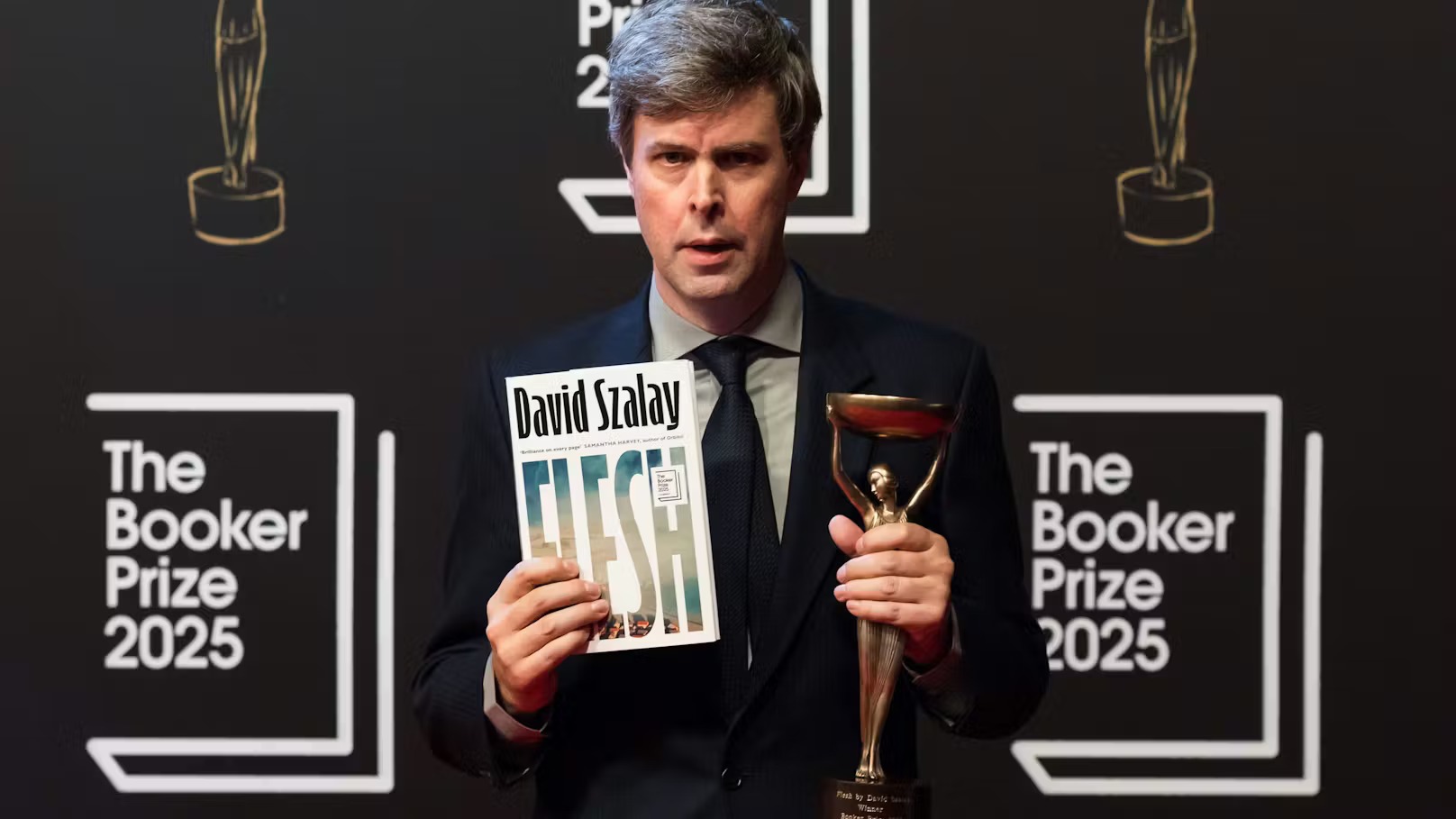
Jonathan Cape Publishing takes the Booker crown for the second year in a row
On November 10 2025, the Booker Prize, one of the most prestigious English-language prizes for literature, was awarded to David Szalay’s Flesh. This novel follows István, from growing up in a quiet town in Hungary to living in elite circles in London. Jonathan Cape, the publisher of this year’s winner, also published the space narrative Orbital, by Samantha Harvey, which won the Booker Prize last year. Who are these publishers and how are they so good at winning the Booker Prize, having published the winner a previous eight times?
Jonathan Cape Publishing was founded in 1921 by Herbert Jonathan Cape and became an imprint of Vintage Publishing UK (owned by Penguin Random House) in 1987. Their website promotes “excellence, and a rebellious and courageous spirit, is at the heart of all we publish”, but that leads me to wonder, what do they actually publish? Notable publications include Atwood’s The Handmaid’s Tale, Ian McEwan’s Atonement, as well as big-name acquisitions into the house, which are often making headlines, including Sarah Perry (author of The Essex Serpent) and Brandon Taylor. Whilst there is no discrimination between fiction and non-fiction, the house seems to be about big names and noteworthy literature. Most surprising of all is their attitude towards graphic novels, previously shunned in the publishing industry, publishing both Joe Sacco’s and Alison Bechdel’s latest novels (The Once and Future Riot and Spent, respectively).
These imprints within larger publishing houses keep their work alive and strong, saving them from closure and allowing them to share literature
Jonathan Cape sits within Vintage Publishing UK, alongside Bodley Head, Chatto and Windus, Harvill, Fern International, and Vintage Classics. Harvill, Fern International, and Vintage Classics publish new and beloved fiction, with Chatto and Windus focusing specifically on feminist literature. Bodley Head specialises in non-fiction, and all thrive within this imprint, part of Penguin Random House, one of the biggest names in publishing. These imprints within larger publishing houses keep their work alive and strong, saving them from closure and allowing them to share literature with the public.
However, as suggested, there is a prestigious nature to the books published by Jonathan Cape. When I covered The Booker Prize for The Boar last year, I noted how the books finding themselves in the long-lists for this award are not books trending online or front and centre in book-stores – they are more obscure and literary than ones the general public tend to pick up. It is no shock that, when looking at last year’s Booker Dozen (a joke about there being 13 shortlisted books), four were published by Jonathan Cape on the longlist. This year, in the 2025 awards, only two Jonathan Cape books were longlisted, not good odds but good enough to win a second year in a row. When we examine the Women’s Prize for Fiction 2024, three made it to the longlist, two to the shortlist, but were beaten by Penguin’s The Safekeep by Yael Van Der Wouden (a very worthy winner).
Holding distinguished authors and literature which are not front-runners in social media and popular bookstores, and their awards
Despite these high numbers in prestigious literary awards, when we look at this year’s Waterstone Book Awards, no Jonathan Cape books make the shortlist in any of the categories of Book of the Year. This leads me to see this publishing house as holding distinguished authors and literature, which are not front-runners in social media and popular bookstores and their awards. Have Jonathan Cape got the magic touch for only esteemed awards? David Szalay has previously been shortlisted for the Man Booker Prize (when The Booker Prize was sponsored by the Man Group), with his novel All That Man Is, but was printed under Vintage Publishing UK, not Jonathan Cape.
Whilst we could speculate here, an important question is how the publisher of a book influences which books you, as a reader, pick up. Do you only buy from certain publishers or use their reputation and repertoire to know you are buying a book that you will enjoy? I can honestly say I have never checked the publisher before buying a book. I care more for the contents, aesthetic covers and authorship when I am wandering around my favourite bookshops. Even when I am looking in charity shops, I notice which books I have seen on social media or recommended to me, rather than the small logo on the bottom of the spine. A quick survey of my to-be-read pile (TBR) in my university room tells me I have some big-name publishers (Bloomsbury and Penguin), but a fair few smaller publishers (nearly all of them from charity shops) and no Jonathan Cape books there.
Will this article make you check who publishes the book you are just about to buy?
Comments