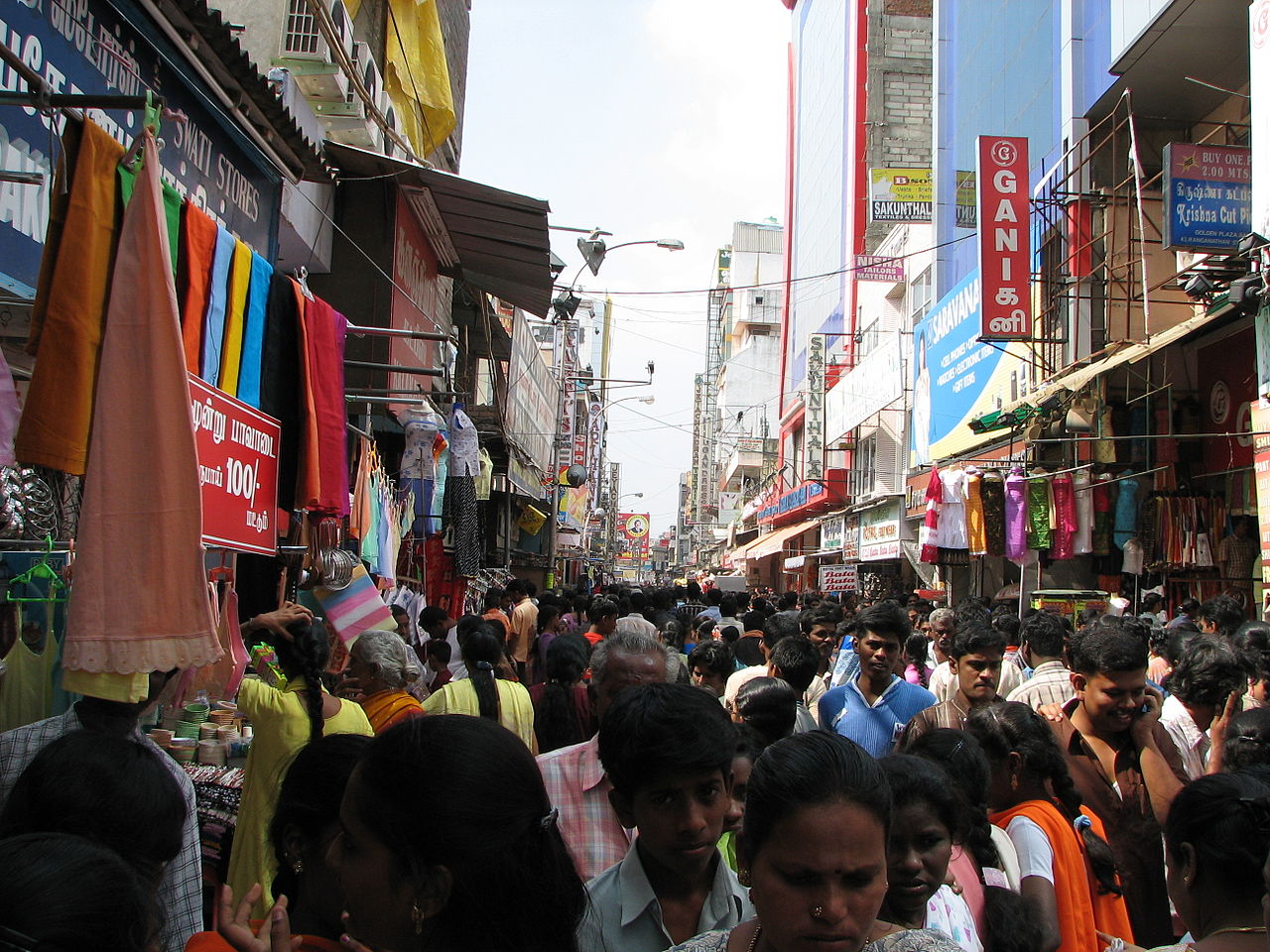
Indian population growth: A victim of its own success?
In April 2023, India claimed its long-anticipated title: the world’s most populous country. Its 1.42 billion citizens (now ~1.46 billion) pushed it above China, a milestone celebrated by Indian politicians as validation of national vitality. Unlike its greying northern neighbour, India is strikingly youthful, with a median age of 28 and over half the population under 25. Demographers hold a positive outlook for decades of continued population growth. This ‘demographic dividend’ of size, youth and low dependency, if harnessed, could propel the economy to the ranks of global powerhouses, the USA and China.
S&P Global and Goldman Sachs predict India to become the world’s third-largest economy by 2030 and second by 2075, respectively. According to standard economic theory, a swelling workforce should fuel substantial labour output and domestic consumption, emulating China in the late 20th century. This young, dynamic population should also generate higher levels of entrepreneurship and innovation. The potential is near-limitless. However, these conditions alone do not guarantee prosperity for India; its dividend may yet turn into a drag.
Female labour-force participation has languished around 30% for decades and shows little sign of improving
Despite such an impressive demographic stature, India’s workforce remains relatively unimpressive. Unemployment persists as a central barrier. Even after overtaking China in population, India’s workforce still lags significantly. Frustrated by the lack of suitable jobs, more than half of the 900 million working-age Indians no longer seek one. The young population accounts for almost 83% of this group, and the youth unemployment rate is over three times the overall level.
The root of the problem lies predominantly in subpar investment in human capital. The government spends barely 4% of GDP on education, a smaller share than any other BRICS economy. As a result, classrooms are overcrowded and often poorly resourced. National assessments suggest that more than half of ten-year-olds struggle to read simple text, and over a quarter drop out before finishing secondary school. Leaving education with few practical skills, an estimated 91% of the Indian workforce has drifted into a vast informal sector, which offers meagre pay, no benefits and minimal job security.
Meanwhile, women continue to be sidelined as economic contributors. Female labour-force participation has languished around 30% for decades and shows little sign of improving. Were women to work at the same rate as men, India’s workforce would grow by an astonishing 235 million people. High fertility rates and insufficient childcare result in long periods taken off work. With societal expectations urging women to stay as the household’s primary caregiver, many professionals struggle to reenter the workforce following childbirth. The mechanization of agriculture has worsened matters by displacing millions of female farm workers. Rising rural incomes have also encouraged families to withdraw women from work – the so-called “family income effect”.
The world’s most populous economy is a paradox: bursting with potential workers but short of real skills or jobs
Resolving this problem would require not only policy reform but a broader cultural shift. More generous maternity benefits and flexible hours would support the widespread transition of Indian housewives into the workforce, as well as stronger enforcement of labour laws that guarantee pay equality and protection from harassment. Prime Minister Narendra Modi has promised to make India an attractive destination for foreign manufacturing investment, fulfilling the “China Plus One” strategy adopted by many multinationals. Such ambition will prove hollow if half the country’s talent remains excluded.
Education, too, will demand more than budgetary lip service to address. At a minimum, expanding vocational training and improving teacher quality would raise productivity and attract foreign investors seeking skilled labour. The government’s push to formalize the economy through digital identity systems like Aadhaar and payment platforms such as UPI has already begun to bring millions of informal workers into the tax net, boosting revenues to fund such reforms.
For now, the world’s most populous economy is a paradox: bursting with potential workers but short of real skills or jobs. China’s growth miracle rested not only on its vast population but also on its ability to support it through massive investment in education and infrastructure. Unless policymakers act fast, India’s population boom may be remembered more as a missed opportunity than an economic dividend – a victim of its own success.
Comments