Assisted dying and the right to personal autonomy: In conversation with Lord Neuberger
Backers of the Assisted Dying Bill believe it is now “near impossible” that the House of Lords will pass the proposed bill before the end of this parliamentary session in May. If this were to happen, the legislation that is backed by Parliament and, according to polling, the majority of the British public, would automatically fail. MPs told the Guardian of their “blind fury” that procedural obstacles had been used by opponents to stop the legislation from progressing, revealing our parliamentary “system at its absolute most dysfunctional”.
Disclaimer: This article contains sensitive themes, please take care when reading.
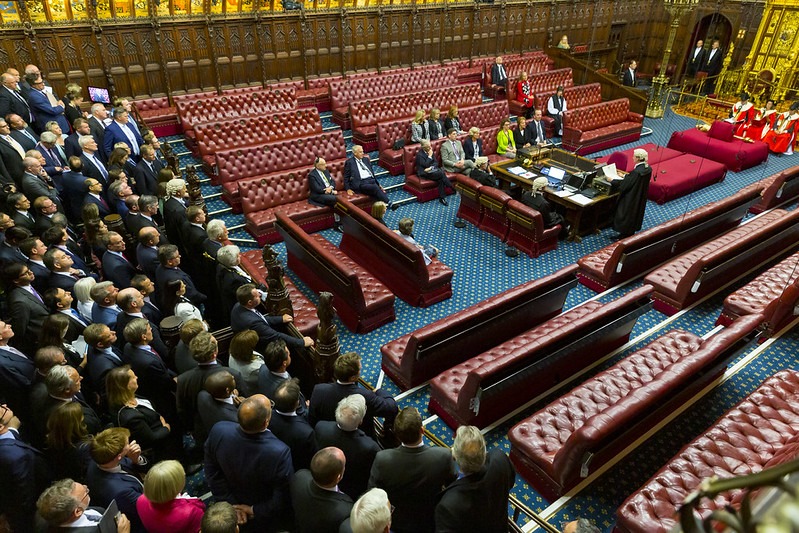
This follows the House of Lords tabling a record-breaking 900 amendments to the proposed Assisted Dying Bill. Kim Leadbeater, the MP who introduced the Bill, warned that some of the amendments looked designed to “try and stop the bill passing through Parliament”. Of these amendments, 579 were tabled by only seven opponents, including Michael Gove, Therese Coffey, and Mark Harper, sparking a letter from 65 peers supportive of the legislation to their colleagues, urging them not to frustrate the will of the Commons.
At this moment, where the Bill’s future hangs in the balance, it is paramount not to lose sight of the issue at hand as the debate moves on to the technicalities of procedure. In the summer, just after the bill had passed its third reading in the Commons, I interviewed Lord Neuberger, President of the Supreme Court from 2012 to 2017, who has “for many years been interested in the topic of assisted dying”. Indeed, liberalising the law on assisted dying is a question he has often considered, as a law lord in the Purdy case, and in the Supreme Court on the application of Nicklinson, and it was an issue I was keen to raise.
“For a long time, I’ve been in favour of liberalising the law,” Lord Neuberger said. “I don’t go to the House of Lords very often, but (in 2021) there was a motion (Baroness Meacher’s Assisted Dying Bill), and I spoke in favour of assisted dying as I think we should permit it.”
During that debate, on 22 October 2021, Lord Neuberger emphasised the right to personal autonomy, stating: “There are many important human rights but, in the end, they can all be encapsulated in a single, overriding right … the right to personal autonomy. Personal autonomy has no more important aspect than the right to control your very existence. It is your life to deal with as you see fit. If you want to end your life, you are entitled to do so, and if you have a fundamental right to end your life, you must require very powerful reasons why you should be denied assistance … the right to be assisted if you wish to kill yourself is reinforced by considerations of humanity.”
The role of personal autonomy remains a guiding factor for Neuberger: “My view is: if I feel that I’m a burden on my family and that I should kill myself, if my family are putting pressure on me to do it, that’s something which is quite wrong. But if they’re saying, ‘No, no, no, you’re not a burden,’ but I want to kill myself nonetheless, it seems to me I should be entitled to. It’s my choice, and if I’m overwhelmed with guilt over what I’m doing to my family, even if they want me to live, it’s my decision. If you need somebody’s help to kill yourself, why shouldn’t you allow it? The other thing I find strange, as a lawyer, is: if it’s perfectly lawful for me to do something, then why is it unlawful for you to help me do it? Sadly, we have this ridiculous situation that if I have somebody who’s prepared to help me go to Switzerland to kill myself, fine, but they cannot do it here, and that’s pretty odd.”
Lord Neuberger was President of the Supreme Court that determined, by a seven-two majority in the Nicklinson case, that it was not for the court to intervene but a matter for Parliament. Tony Nicklinson, suffering from locked-in syndrome after a stroke in 2005, wrote for the BBC in 2012: ‘It cannot be acceptable in 21st-century Britain that I am denied the right to take my own life just because I am physically handicapped’. By the time of the Supreme Court decision, Nicklinson had ended his own life, having, as Lord Neuberger wrote in the 2012 judgment, ‘embarked on the very difficult and painful course of self-starvation, refusing all nutrition, fluids, and medical treatment’. Lord Neuberger noted to me that, as in Nicklinson’s case, the impact of the Suicide Act 1961 might shorten some lives by encouraging people to take their own life prematurely before they lose the capacity to do so.
I am strongly of the view that the status quo should not be maintained and that the law should be changed to permit assisted suicide, subject to safeguards
– Lord Neuberger
For him, this is a concern ignored by the current Bill: “I’m not entirely convinced that it’s right to limit the right of people with six months (or less) left to live. One, from all the doctors I know, it’s quite difficult to tell how long someone has left to live. And two, I think that if you have 30 years ahead of you, like Tony Nicklinson, your desire to kill yourself seems to me to be far more defensible than if you’ve only got six months. I know those six months are often very painful, but looking at other countries – in Switzerland, assisted dying has been lawful since 1941, and in the Netherlands and Belgium since the beginning of the century, more or less – there are very, very few, if any, recorded cases where the law has been used for inappropriate purposes.”
“I am strongly of the view that the status quo should not be maintained and that the law should be changed to permit assisted suicide, subject to safeguards. But as I say on the current Bill – and I have to be careful because I honestly haven’t been among the weeds yet, and I don’t know every detail – I do feel quite strongly that we should change the law. I’m not sure what I think about the present bill, but I’ll look at it carefully.”
Following the successful third reading in the Commons, the bill received its first reading in the Lords on 23 June 2025. As a Private Members’ Bill, put forward by Kim Leadbeater, progress through the Lords is not assured. Lord Neuberger reiterated his disappointment that the government had not sponsored an assisted dying bill in this Parliament, which would have made its progress through the Lords far easier: “I don’t know what will happen in the Lords … but I think that the government should have introduced it. I think that it was really done the wrong way round. There should have been a parliamentary committee to look into it, and then, as a result of the committee, there should have been a bill – instead of which we have a bill that has been pulled around in committee on the private members’ basis.”
The former Justice Secretary, Shabana Mahmood, has openly criticised the bill on the basis that the state should ‘protect and preserve life, not take it away. The state should never offer death as a service’. She also wrote to her constituents saying the bill was the ‘slippery slope towards death on demand’. For this, Mahmood faced significant backlash, as she ignored the Prime Minister’s demand that ministers remain silent, as it was a ‘vote of conscience’. Lord Neuberger said: “I do not think it was a very sensible thing for her to say, but I think you can uphold a law you do not agree with. Indeed, it’s your duty to do so, the same as a judge. I do not think she’s a bad minister. In fact, what I hear is that she is pretty good. But we don’t have the same as we did with the old system of the Lord Chancellor – somebody who really understands what being Lord Chancellor means.”
I do not want to overblow the judiciary, and I think that the role of a judge is simpler to define and more mysterious than that of a politician
– Lord Neuberger
“In the old days, we had a highly experienced lawyer who knew the legal proprieties, but now we have a career politician who often isn’t really much of a lawyer, and sometimes isn’t a lawyer at all. While I think we had to change the system, because the old system probably was unsustainable, I think the new system is not good and needs to be looked at again. Having said that, we have still had some good Lord Chancellors in the new system – but also some less good.”
The original Assisted Dying Bill contained a proposition requiring a High Court judge to approve applications for an assisted death. However, this was altered at committee stage by a vote of fifteen to seven in favour of a three-person panel of experts comprising a psychiatrist, social worker, and ‘senior legal figure’, which – according to proponents of the bill – makes the protection more robust. Lord Neuberger shared similar thoughts: “There are two points. Firstly, was it right to have a High Court judge? And what are the implications of having a panel rather than a judge? As far as the principle is concerned, I thought it was wrong. First of all, judges are meant to decide disputes in court; they are not meant to be what is essentially part of the executive function of government, and therefore, in principle, it’s a misuse of their functions.”
“Secondly, it would almost certainly have to be Family Division judges, who are grossly overstretched already. Judges should be left to decide cases where there is a dispute. For example, if the panel has approved for this person to be helped to kill themselves, someone objects and believes the panel did not do it right, that dispute can then be taken to court for a judge to decide; similarly, where a panel does not approve, and the person who seeks approval for assisted dying wishes to challenge that decision. That is where a judge comes in: where there is a genuine dispute, not before. Therefore, as a matter of principle, I think we are in the right place now. As to the fact that 26 MPs said that they had changed from support to opposition because of the removal of the judge from the panel, I make two points: one is a slightly cynical point, which is that maybe some or all of the 26 were looking for an excuse to change their mind, and this was a good excuse. Secondly, it is an indication of the confidence people have in High Court judges.”
Renowned as one of the great jurists, Lord Neuberger summarised how he viewed the position of the judge in society: “I do not want to overblow the judiciary, and I think that the role of a judge is simpler to define and more mysterious than that of a politician. People do not really understand the law, and when they see what is on the Supreme Court, it’s not a language and approach to life they understand, and so it becomes a sort of priestly function. That is unlike politicians, where the language is very much what people understand.”
He also said that judges are able to have a comparatively simple approach to life: “I have to apply the law as I understand it to be, and I have to be fair, and that’s it”. Politicians, he says, are in a far more difficult position: “Thirdly, and partly because of the first two points, I think the judiciary has maintained a culture of high standards in this country. Whether that is merely good fortune or not, I do not know. We still have a lot of people who are very successful lawyers – earning a lot more money in practice than they ever will as a judge – willing to sacrifice their income to become judges and do a good job. I am not saying judges are badly paid, as by almost any standard, they are paid extremely well, but by comparison, a lot of lawyers are paid much better. I hope that culture is maintained, because it’s important and valuable.”
The bill is currently facing its greatest challenge from the Lords. If this proves to be insurmountable, is assisted dying in the United Kingdom facing the end of the road? Well, no. It is plain, as Lord Neuberger states, that the status quo is neither fair nor sustainable. The tragedy, if this bill were to fall, is that, as it has been before, it is likely to be another decade until assisted dying inevitably returns to the legislative agenda. Over that decade, many will die unnecessarily painful, premature, and violent deaths, all while being denied their ultimate right to personal autonomy. This is, however, not a call for rushed decision-making. Rather, it must be hoped that the peers will continue to examine the bill and its potential consequences, with intellectual rigour and clarity of thought, without using procedural obstacles to frustrate the forces of change.
This article first appeared in the September 2025 edition of the New Law Journal, but has since been updated.
Comments