Weird Britannia: The accursed ‘73 Yards’
As a fan, Doctor Who is inherently frustrating: as a show, it has pretensions of endless variety but is instead largely formulaic. Every once in while an episode will come along that truly pushes the boat out in terms of what the show can do but such brilliance, as realised in ‘Ghost Light’ or ‘Father’s Day’, is never once repeated. Resultantly, there are a plethora of differing visions of Doctor Who’s potential, but they are trapped within an ailing show past its prime.
The recent ‘RTD 2’ era suffers from many of the same problems. For all the optimism that surrounded the grand return of the show’s once saviour, we are left with a host of disappointments, big ideas that were never quite executed in the right fashion, and indeed some truly awful pieces of television.
Above all, though, there is the sense that this era has engendered something of an identity crisis within the show: the introduction of fantasy elements, a streaming-orientated approach, pandering to a younger audience, and a revitalised camp tone have somehow strayed from the core of the show to a point where it feels unrecognisable.
Nevertheless, for all his failings, RTD (Russell T Davies) still managed to provide us with a sense of the ‘real’ Doctor Who, covering ground untouched since the classic era, whilst providing an entirely fresh and authentic take on the BBC’s longest-running show. He did this in what is not only the best episode of Doctor Who in years, but of television, period: the weird, and the eerie, ‘73 Yards’.
‘73 Yards’ breaks with tradition as regards Doctor Who’s strict sci-fi roots
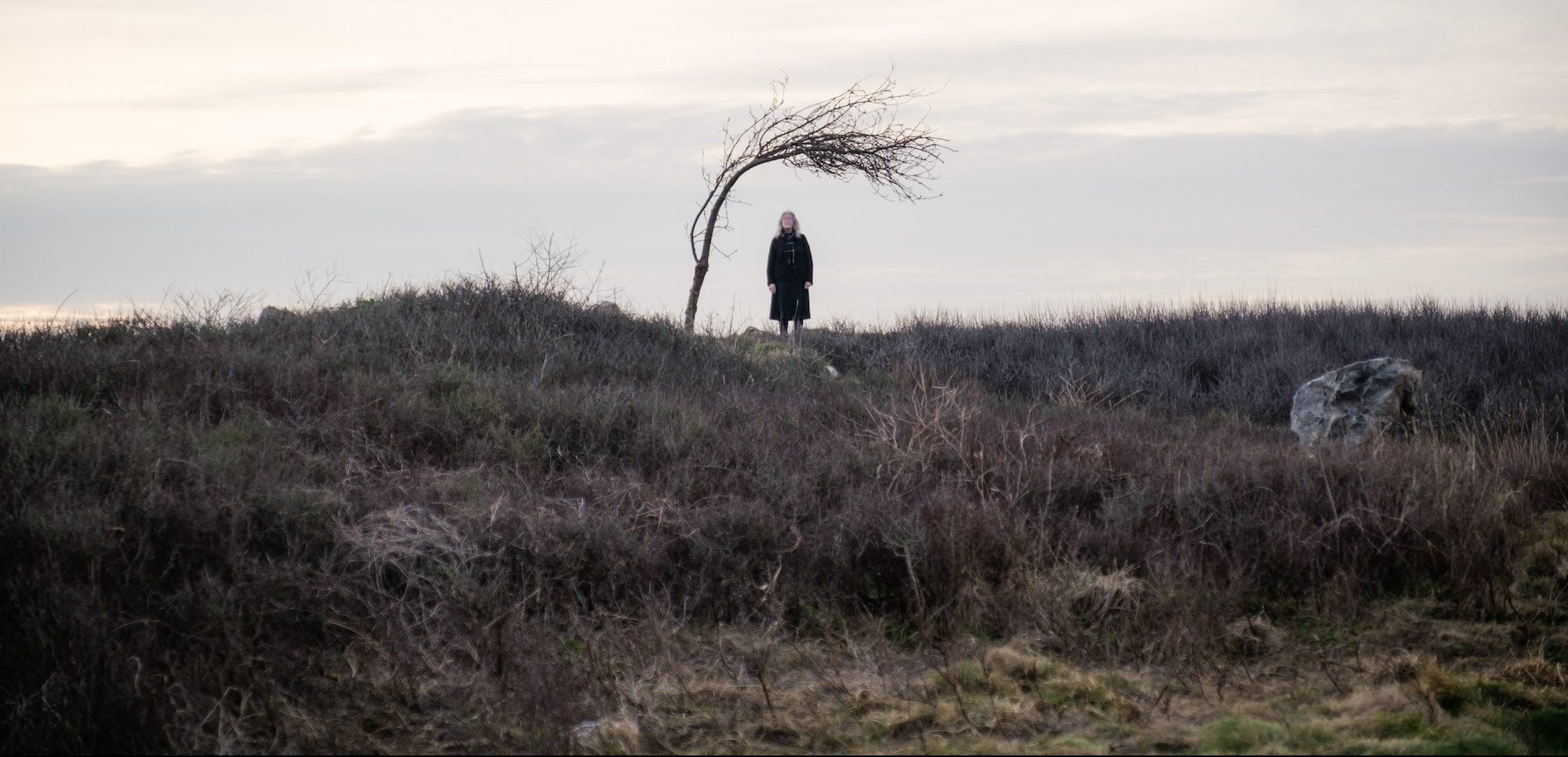
I mention these concepts of the weird and the eerie as they are rooted in the science-fiction tradition, as is Doctor Who. Defined by Mark Fisher as that which should not exist, the weird has obvious implications for ‘73 yards’: the woman whose presence is unexplainable, her perverse effects on those around her, and the fact that she can never be seen up close. However, so too does a feeling of the eerie crop up through the sudden and prolonged absence of the Doctor through the episode, although this latter aspect is notably less significant considering the same effect is also produced by the earlier RTD episode, ‘Turn Left’, another shining example of Doctor Who.
As concerns both of these aspects of the episode, they are seemingly tied to elements of the supernatural. The “fairy circle’’ is part and parcel of this. Its intricate web-like design and the strange messages within (“I miss you’’ and “Rest in Peace Mad Jack’’), are both out of place but also have a touch of the melancholic about them; sadness, hopes, dreams, and childlike innocence attach themselves to the material circle, which acts as catalyst for the episode’s plot after the Doctor breaks it, spurring on forces beyond our comprehension…
Certainly, ‘73 Yards’ breaks with tradition as regards Doctor Who’s strict sci-fi roots, concerning itself instead with a phenomenon of curses and folkloric elements. After the circle is broken, Ruby is cursed to be followed by the woman, always 73 yards away, or at least this is implied to be a curse.
Gwilliam reflects a demonic aspect of Britain manifested in the present day
In a similar vein, in David Peace’s ‘English Fairy Story’, The Damned Utd., the real happenings of Brian Clough’s infamous stint as Leeds manager in 1974 are interpreted the same: through eerie absence, the presence of former manager Don Revie works its way into the corridors of Elland Road, into material objects (such as the desk that Clough burns at the start of the novel in a sort of mad exorcism). More so, however, it is felt through the curses that mark each individual ‘reckoning’ within the novel.
Both, however, are implied internal creations, conceived by paranoid minds in the face of the unknown. As outsiders in cursed lands (RTD’s Wales and Peace’s Yorkshire), they encounter a deeply irrational sense of intimidation that is suggestive of a primal ‘folk’.
For RTD, however, the curse is less confined and makes its way into Ruby’s homeland of England. Through the character of Roger ap Gwilliam, a Welsh Prime Minister of the fictional populist Albion party, an image of an ancient Britain or Britishness is created, tied to the association of Wales with the ancient Britons, and of the myths of King Arthur.
Its maddening effect is its utmost strength
As imagined by Ruby as a product of the fairy circle, Gwilliam reflects a demonic aspect of Britain manifested in the present day. His calls for a ‘Greater Britain’ reflect the populist yearnings we have grown accustomed to, but a desire to both acquire and launch nuclear weapons in the name of nationalism is altogether scarier, characterising him as a Mad God, a creature of spite and hate, but spawned out of Britain. Though brief, his inclusion prompts the audience to reflect on the state of Britain in the age of Reform and Brexit.
The genius of the script, however, lies in the fact that he very well could be just another man. This opens the episode up to interpretation, but, more importantly, this lack of anything concrete makes it all the more disturbing and has a lasting impact beyond the credits.
Altogether then, ‘73 Yards’ remains an anomaly of recent Doctor Who; it is self-contained, tonally distinct, and far more sophisticated in its exploration of both character and concept. Its maddening effect is its utmost strength. Thus, it stands as a cut above the rest, not just within Doctor Who but British broadcasting in general.
Comments