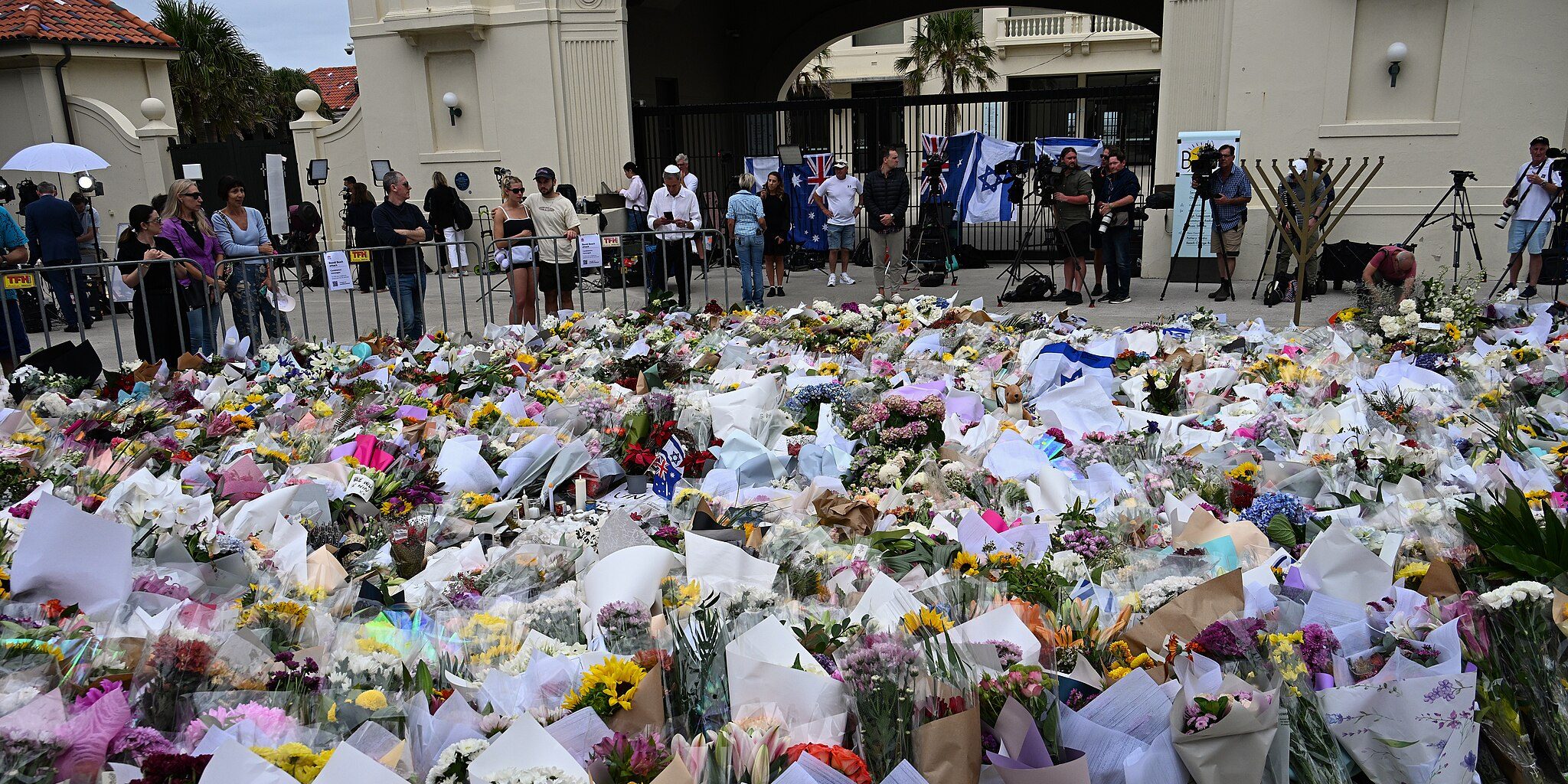
The Bondi Beach attack: A result of rising antisemitism
On 14 December 2025, at Bondi Beach in Sydney, 15 people were killed and dozens more injured by a pair of gunmen who opened fire at a crowd gathered to celebrate the Jewish holiday of Hannukah. It was one of the most horrific acts of mass killing the country Australia has ever seen.
Discussions of globally rising antisemitism are intrinsically intertwined with the Israel-Palestine conflict
The evidently antisemitic attack, deliberately targeting Jewish people at a religious gathering, prompted condemnation from Jewish communities across the world. This condemnation was directed both at the individual actions of violent terrorists, but also at the ignorance and inaction of the Australian government, and their failure to stamp out the embers of what has been described as a pattern of rising antisemitism before they exploded into this deadly incident.
Discussions of globally rising antisemitism are intrinsically intertwined with the Israel-Palestine conflict. As such, most statements describing a pattern of rising antisemitism both in Australia and worldwide credit as the starting point the 7 October 2023 Hamas attacks on Israeli civilians.
Organisations such as the American Jewish Committee (AJC) have released such statements, describing events including anti-Jewish protests, graffitied slogans saying ‘Jew die’, and anonymous threats made towards Jewish businesses.
While the statement made by the AJC repeatedly conflates the Zionist ideology with fundamental Jewish identity, naming in its list of antisemitic attacks incidents targeted not at the Jewish identity but instead focussed on condemning Zionism, it is true that attacks on Jewish identity have been mounting. Synagogues have frequently been the subjects of these attacks: the Adass Israel Synagogue arson December 2024 in Melbourne, and the Manchester synagogue attack in October this year in the UK are notable examples.
Prime Minister Anthony Albanese…announced the adoption of the so-called Plan to Combat Antisemitism
Resentment towards the Australian government for failing to prevent the festering of antisemitic hatred in Australia is growing amongst the Australian Jewish community, who said they had “warned the government of this many, many times over”.
The recent attack has galvanised the Australian government into action. In a 18 December media release, the Australian government, led by Prime Minister Anthony Albanese, laid out the actions they had already undertaken, and announced the adoption of the so-called Plan to Combat Antisemitism, which had been developed by Australian Special Envoy to Combat Antisemitism, Jillian Segal.
The Plan includes significant legislative changes to crack down on festering antisemitism, the principal points of which include: the creation of aggravated hate speech offences, increased penalties for hate speech, making hate speech an aggravating factor in sentencing other crimes, developing a means to keep track of organisations whose leaders engage in hate speech and developing a new, narrow federal offence for serious vilification based on race.
Some in the Jewish community still wish the government had been more punctual, though there is general confidence that the new reforms will be effective. The Executive Council for Australian Jewry (ECAJ) said that the adoption of the Plan and subsequent legal reforms could only represent a starting point, and the first few steps in eradicating racial hate towards Jews.
A significant number of attacks on Jewish people and communities have stemmed from an ignorant understanding of Jewish identity as synonymous with Israeli solidarity
In a response to the government’s adoption of their plan, ASECA stated that “education must be placed at the forefront” of the process of tackling antisemitism, and that further reforms “must follow across education, universities, media and the public sector.”
A significant number of attacks on Jewish people and communities have stemmed from an ignorant understanding of Jewish identity as synonymous with Israeli solidarity and support for the actions of the Israeli government, as well as a blurred understanding of the differences between peoples and ideologies – specifically referencing Zionism. It is essential to reinforce the distinctions between these groups, identities, and ideologies, in order to protect Jewish communities from blind violence. Reformed understandings of definitions and deeper familiarity with the contexts of ideologies such as Zionism must come quickly.
Incidents such as Bondi Beach, which were perpetrated by individuals acting alone and without connections to wider terrorist cells, were fuelled entirely by hatred stemming from ignorance. It is this ignorance that should be tackled first and foremost, to completely disentangle in the public consciousness the Jewish identity from the things for which it is being targeted.
Comments