Preparing the UK’s ‘sons and daughters’ for war – with Russia?
We can’t end the year without yet another ominous announcement about Russia’s advance. As 2025 draws to a close, we’ve seen state officials become increasingly comfortable with reigniting national anxieties to guide policy.
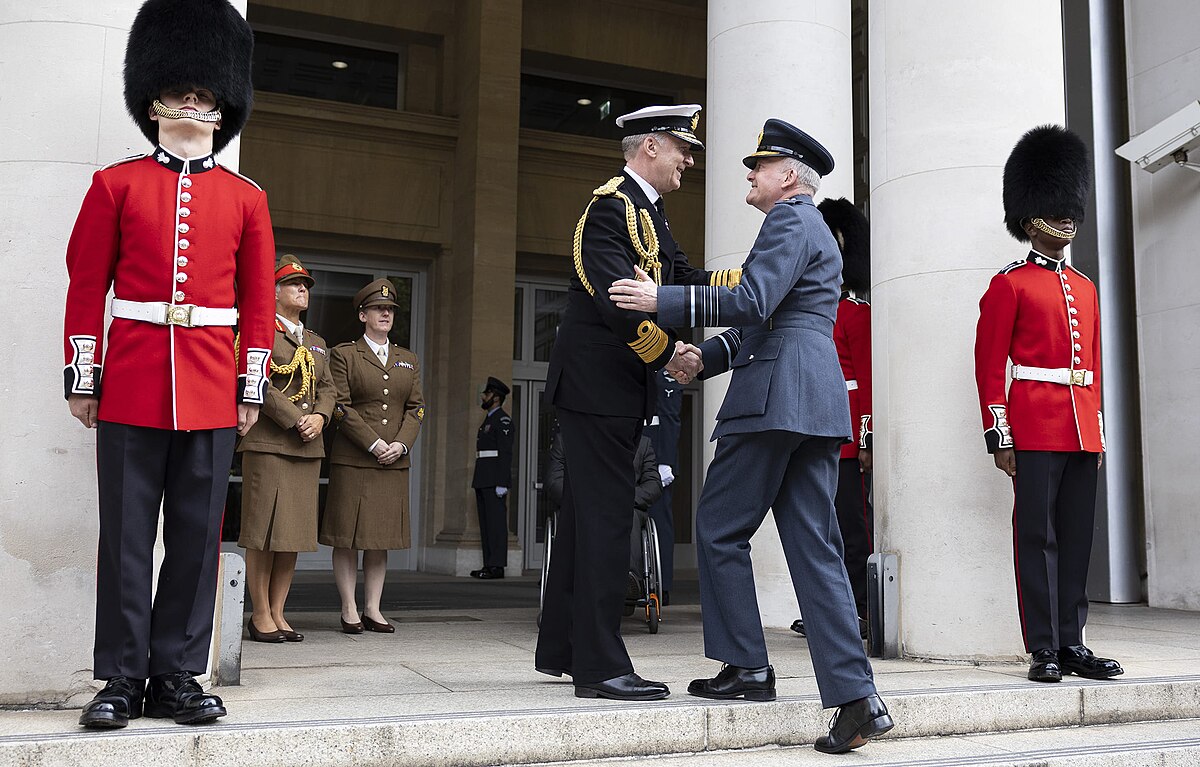
Chief of the Defence Staff Sir Richard Knighton has said that the UK needs “more people being ready to fight for their country” to deter a potential confrontation with Russia. His message called for a society-wide response, including more regular forces, more cadets, and more school leavers and graduates entering the defence industry. However, even with the government’s acceptance of the UK’s Strategic Defence Review recommendations, which support such plans, and with Keir Starmer’s announcement to increase defence spending to 3% of GDP, Britain is far from prepared for a Ukraine-style large-scale deployment, should one become necessary.
The UK’s latest National Security Strategy, published in June, further concedes that the British homeland itself could come under direct threat in a wartime scenario before the decade is over. “Sons and daughters. Colleagues. Veterans”, Air Chief Marshal Knighton said, “will all have a role to play,” and “more families will know what sacrifice for our nation means.”
Public reaction has been disbelief and scepticism. The prevailing consensus appears to be that a country unwilling to defend its people cannot reasonably expect their defence in return. After years of economic mismanagement, cuts to public services, a mishandled pandemic, a broken housing market, and a cost-of-living crisis that has hollowed out young people’s futures, appeals to “shared sacrifice” are more ironic than inspirational. Patriotism, it turns out, is hard to recall when the social contract no longer feels intact. And it isn’t a sign of apathy or selfishness, but an understandable and rational response to risk with no reward.
Risk has been outsourced, and decisions are made by people that hide behind their wealth, private security and political distance, confident that neither they nor their families will ever pay the price
For most of British history, large sections of the elite were protected by inherited wealth or patronage. The choice of military, legal, or civil service careers rarely endangered long-term plans, but the same isn’t true today; the economic trade-offs are no longer softened by said privileges. Modern Britain demands sacrifice while offering little in return. A military career today often means modest pay, prolonged absences from family, limited control over postings, and a looming threat of redundancy the moment defence cuts come into force.
It’s why modern war rhetoric increasingly falls on deaf ears. Risk has been outsourced, and decisions are made by people who hide behind their wealth, private security, and political distance, confident that neither they nor their families will ever pay the price. Yet traditionally, the monarchy actually justified its privileges through protection: taxation and loyalty in exchange for leadership on the front lines. At present, it remains a ceremonial institution and decorative symbol stripped of any reciprocal responsibility.
But if the state wishes to invoke a language of duty and nationalism, it should begin by proving that the obligation applies equally. War-obsessed leaders who insist that Britain must prepare for one should not have their families structurally exempt from its risks. The authority to send other people into danger should be paired with the shared exposure to it, and with the condition of sustaining a younger generation before demanding anything from them. There is also a fundamental contradiction in rallying to “defend Britain” while refusing defence’s basic premise, which is the willingness to serve. If this is genuinely about national survival, we’ll need a lot more than performative outrage through riots and property damage.
Beyond Ukraine, there is no direct military conflict with European states, but a grey zone that entails cyber wars, espionage, disinformation campaigns and drone incursions
So, is the announcement a test of patriotism or fearmongering?
NATO Secretary General Mark Rutte has warned that Russia could be capable of attacking a NATO state within the next five years, but has not explicitly said that it will. As of now, Russia is not at war with NATO. Beyond Ukraine, there is no direct military conflict with European states, but a grey zone that entails cyber wars, espionage, disinformation campaigns, and drone incursions. Dame Eliza Manningham-Buller, the former head of MI5, claims Britain may already be engaged in a sub-conflict with Russia. Even recent incidents, including drones drifting across NATO airspace and Russian fighter jets penetrating Estonian territory, are undoubtedly provocative and support the predictions of Dr Marion Messmer, a senior research fellow on the International Security Programme at Chatham House, that Russia could attempt an “accidental” strike in the Baltic Sea.
The demand for wartime preparedness also comes at a period when the Western bloc may be under threat. Nearly four years into the war in Ukraine, European governments are scrambling and becoming increasingly conscious that their influence over the outcome is little. The reality is that now, the decisive decisions actually belong to the US and Russian presidents, Donald Trump and Vladimir Putin.
The Trump administration, especially, has dealt a profound blow to the collective Western front, signalling its intent to disengage from Ukraine and implying that the war is a poor investment and use of its resources. Instead, it seems they are prioritising securing deals, a pattern indicative of Trump’s tendency to sideline traditional allies so he can do as he pleases. Military support under these conditions has become reluctant and conditional, with Europe bluntly being told that this is now its own problem to manage.
Any agreement will likely be fragile, and a future conflict cannot be ruled out entirely
The Kremlin has come out and denied Russia’s plans to invade European countries, dismissing such narratives as hysteria. Putin has also stated that Russia does not seek war with Europe, while insisting it would respond if attacked. Meanwhile, at the time of writing, the US has sent a special envoy to Berlin to negotiate an end to the war in Ukraine, with reports suggesting that Kyiv may be willing to settle under a set of security guarantees, but may be pressured into territorial capitulation and a permanent abandonment of any NATO prospects. It’s a plan that reads less like peace and more like Trump just indulging Putin. But whatever is made from these talks suggests not an imminent war but an uneasy, provisional settlement. Any agreement will likely be fragile, and a future conflict cannot be ruled out entirely. It is, however, a far cry from an outright Russian invasion of Europe, and inflating conditional risk only satisfies political ends in justifying militarisation, distracting from decline and delaying reform.
Is increasing panic while asking a disillusioned public to volunteer their lives really imperative, or is it only a diversion from domestic incompetence? Either way, the approach no longer serves its purpose. A generation raised through financial crises, austerity, and declining living standards is unlikely to be moved by tired appeals to national unity. What people are now seeing is a political class that remains untouched while ordinary citizens return home traumatised, politically expendable, and economically worse off than before.
All in all, without first proving its credibility, the core establishment cannot continue speaking of loyalty and sacrifice so lightly or depend on entitlement when geopolitics becomes uncomfortable.
Comments