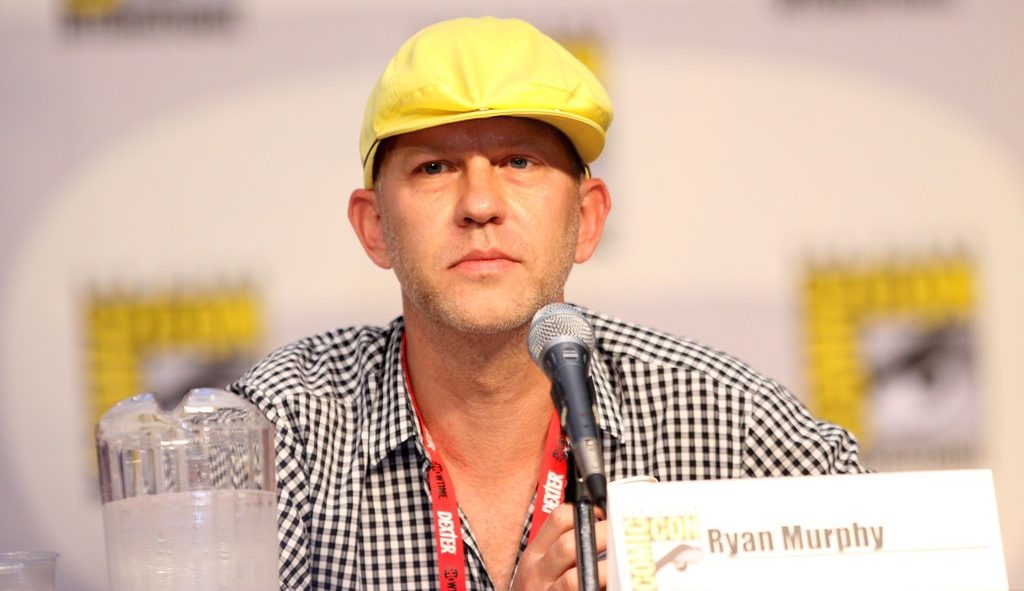
Monster of the Week: Ryan Murphy
There are few people more successful than Ryan Murphy in remaining relevant. Glee will no doubt haunt theatre rehearsals for the rest of time, and one of his many Netflix originals never seems to be far from the public zeitgeist. But Ryan Murphy is not just the man behind the Monster anthology series – he seems to be at the scene of most TV crimes for the past 20 years.
His biggest crime, undoubtedly, though is his sadly unacclaimed reality show, The Glee Project, which asked if it was possible for one man to make a whole show where everyone tells him how great he is. The prize on the show was simple: a role on the, at the time, most popular show on TV. Over the course of the series, we see 12 young adults go through a variety of Glee-related challenges, until only one remains. Murphy is treated as a god; it is down solely to him who stays and goes, and he likes to remind everyone of this throughout.
A reality competition like this was not exactly groundbreaking; it’s no worse than the many Simon Cowell rip-offs (a man who could definitely fill an article himself). But the thing is, the hopefuls are not judged on their ability to perform, act, or sing. Instead, Ryan Murphy is looking for someone to literally be the character they will play. He wants to ‘write the character with them’, which means he wants them to already be the character, insecurities and all. Nothing shows this better than when one of the contestants, Lilly, an 18-year-old who, in a personal moment, admits to her insecurities around her weight. Ryan Murphy’s eyes sparkle; you can see the potential future storylines forming in his head. He can’t wait to write his various jokes and insults, jabbing away at her ‘character’ for comedic value.
Characters you hate are often just as captivating to an audience as the ones we love
Contestants on reality TV aren’t ‘characters’ in the traditional sense, but often producers will edit and use certain creative liberties to round off people into more simplistic caricatures or archetypes. If you find someone unlikable in an episode of Love Island or Big Brother, this is rarely an accident. Characters you hate are often just as captivating to an audience as the ones we love.
Therefore, when creating characters in reality TV, producers normally adhere to certain archetypes. Ryan Murphy is therefore stuck in that sense; he is not going to give the villain edit to someone he ends up casting on the main show. It is clear from the first episode which characters are meant to be unlikable and which ones we are meant to root for, meaning it soon becomes obvious which characters are going to make it to the end.
Nowhere does this stand out more than with ‘Irish heartthrob’ Damien McGinty, who would later play Rory Flanagan in the show. It is clear Ryan saw the Irish character, and the numerous Irish-related jokes he could sprinkle in the show (one character literally believes him to be a leprechaun). Not only do we have to sit through Ryan Murphy telling us Damien’s truly average swing covers are exceptional and fit the show perfectly, but we also have to watch him send much more talented people home just because they lack as obvious character traits. It leaves you wondering who gave this guy so much power.
He is determined to blur the lines between the actor and the character
He did. It’s his show. And he tells us. Repeatedly. He gets the final say on who stays and goes. People give him advice, but most of it is ignored.
As ever, he is determined to blur the lines between the actor and the character. Ryan Murphy, to be fair to him, knows how to create a fandom. By making his characters so similar to the actors that portray them, it allowed for almost a second show, that being the actors’ personal lives. Of course this would become uncontrollable. Darren Criss, in particular, talked of the negative effects of having such close scrutiny on your private life, and how he felt it created a parasocial relationship between the fans and the actors. But I doubt Murphy cares about such things as privacy. How dare it get in the way of compelling storytelling!
In truth, The Glee Project is just as manipulative and contrived as all reality television is, but not many are so obsessed with reminding you how awesome the mind behind them is. Ryan Murphy mastered the ability to manipulate real people into characters that you love, and yet it leaves you wondering why he was unable to do that to himself.
Comments