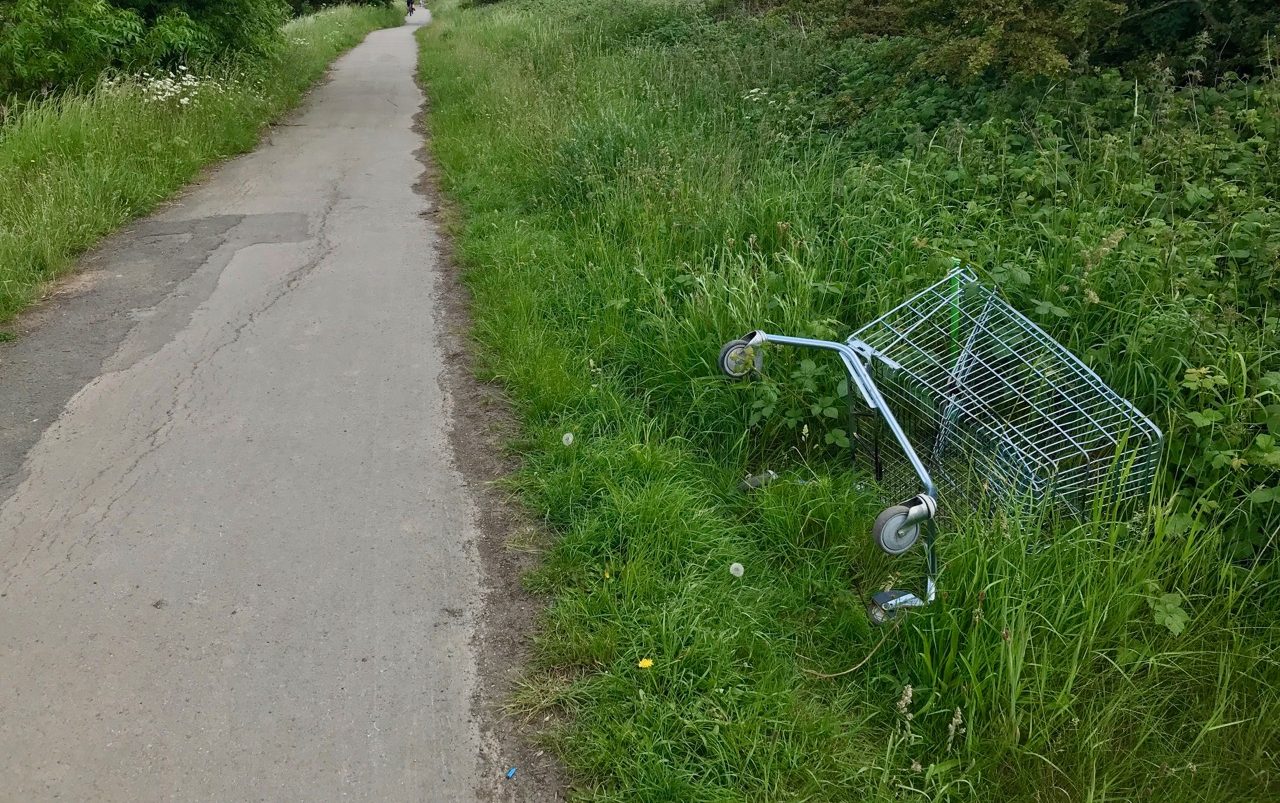
Warwick research reveals abandoned trolleys are worse for the environment than four London to NY flights
Abandoned shopping trolleys are a ubiquitous part of every university experience, whether it be using them to wheel your friend home after a drunken night out at POP! or to lug your belongings down into the car for the pre-Christmas drive home.
However, research by Warwick Manufacturing Group (WMG) has suggested that those stray trolleys are taking a significant toll on the environment. At least 520,000 trolleys are reported as abandoned in the UK each year.
Collecting and refurbishing these trolleys would result in 343 tonnes of CO2 emissions – the equivalent of flying from London to New York and back, twice
Collecting and refurbishing these trolleys, which represent 11,000 tonnes of wasted metal, would result in 343 tonnes of CO2 emissions – the equivalent of flying from London to New York and back, twice.
Any upcycling process would require the trolleys to be collected, often in diesel vans, and then driven to a refurbishment centre where the trolley could be restored – resulting in a carbon footprint of 0.69kg of CO2 per trip.
With around 30 trolleys left stranded in the Canley–Cannon Park area each week, the environmental impact quickly adds up. However, while the refurbishing process has an obvious negative impact on the environment, researchers found that upcycling trolleys was still more environmentally friendly than manufacturing a fleet of new ones.
Dr Neill Raath, an Assistant Professor at WMG who led the research, said: “One trolley would have to be collected 93 times by a diesel van to have the same environmental impact as manufacturing a new one.”
Supermarkets are therefore increasingly being urged to reduce the need to produce new trolleys, with the 15-year lifespan of a humble trolley often currently going unused. Initiatives such as the Trolleywise app aim to support this, with geo-location technology allowing customers to flag a spotted deserted trolley.
While the abandoning of trolleys doesn’t look likely to end any time soon, Dr Raath urged people to “consider the environmental impact of letting [a trolley] go unused”, as nearly 99% of the environmental impact could be minimised through a simple refurbishment.
Comments