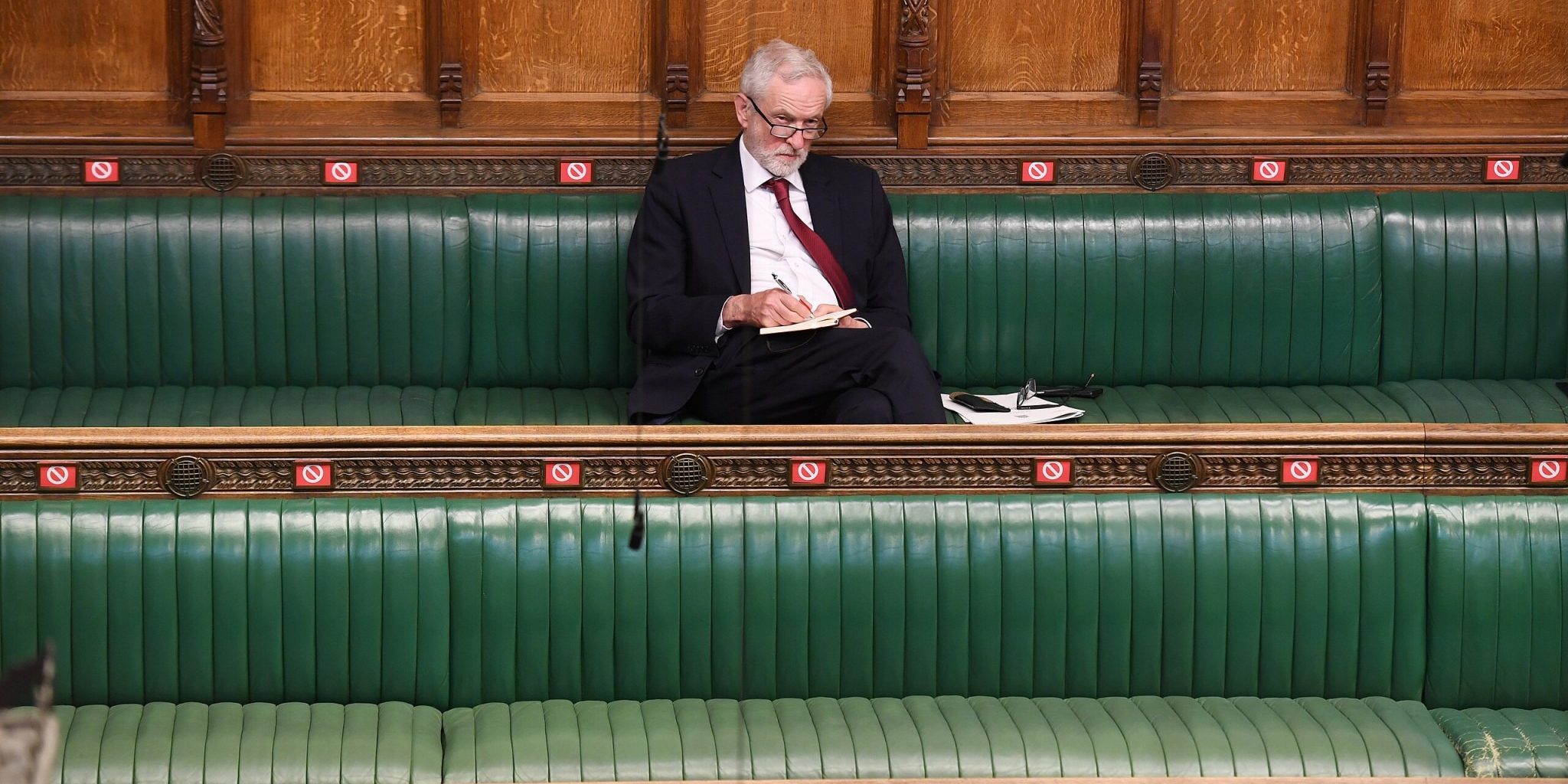
The Your Party PR nightmare continues: How not to launch a political party
The much-anticipated socialist Your Party conference got underway on 29 November in Liverpool, with all the promise of a new left-wing force ready to challenge Labour from the grassroots. Instead, the whole thing descended into a debacle so self-inflicted it might have been mistaken for a parody.
A movement once buzzing with the energy of its 80,000 initial supporters now can’t seem to successfully navigate its own launch without tripping over itself and falling even further behind square one. Membership has dropped to around 50,000 members, which is quite the development, just not the one they had hoped for. The shortfall was even more acute at the conference: of the 13,000 delegates forecast, only 2,000 showed up.
Jeremy Corbyn, co-founder of the party, kicked off the weekend with a speech calling for unity, while his fellow co-founder Zarah Sultana boycotted the first day in protest. All because, just hours before the applause for Corbyn began, the party was expelling members in real time. Sultana’s close ally, independent councillor James Giles, was reportedly denied entry into the venue over an alleged investigation by the Information Commissioner’s Office (ICO), which Giles vehemently denies. He instead described the decision as an attempt by Corbyn’s allies to suppress grassroots voices.
As if that weren’t enough, several activists, including Lewis Nielsen, were also expelled on the same day for holding dual membership with a party that is registered with the Electoral Commission, despite the Socialist Workers Party (SWP) not being registered with the Electoral Commission at all. Sultana, a flagship figure of the party, described the expulsions as a “witch hunt” and blamed “nameless, faceless bureaucrats”, a comment widely interpreted as a swipe at the Corbyn circle, particularly at Karie Murphy, his controversial closest aide.
Today, the drama unfolds while the party has yet to draft any policies and has only just decided on a name (the same one they initially publicly rejected)
Corbin’s exit from the stage after his speech, ignoring Sultana entirely, only emphasised the depth of the tensions between the party’s co-founders. But where did it all begin? After the 2024 election, Corbyn and Sultana’s two respective left-wing factions merged – clashing over leadership shortly after, with Sultana unilaterally announcing her intention to co-lead the party and Corbyn refusing to endorse her decision. It became a disagreement that resulted in a very public feud, forcing their new party into messy infighting. Today, the drama unfolds while the party has yet to draft any policies and has only just decided on a name (the same one they initially publicly rejected).
Seriously, how can a party expect national support without even doing the most basic preparation before going public?
While Sultana expressed solidarity with the SWP members and the independent councillor, her decision to boycott the conference unfortunately became the leading story of the weekend. The press didn’t even have to break a sweat: “chaotic” became the buzzword of the weekend, reviving the trope of classic “left-wing infighting”.
This moment was intended to position Your Party as the authentic representative of working-class left politics. Both Corbyn and Sultana have suggested they wouldn’t rule out collaborating with the Greens and other parties to “stop Nigel Farage getting into Number 10” and to combat fascism. But they still hold a reluctant and perhaps outdated perception of the Greens, along with a dead-set conviction that Zack Polanski is not the solution for the left in the UK. It’s an opinion that risks further splitting the progressive vote, with many on the left torn between compromising for a candidate closer to their goals or sticking to stronger socialist principles with Your Party, even if it means getting nowhere.
There was at least one tangible development at the conference: with 51.6% support, members endorsed a collective leadership model – a committee selected by the membership rather than a single figurehead, meaning that the party’s biggest personalities won’t actually have the chance to lead the party. In theory, it’s grassroots democracy and the decentralisation of power, but in practice, it risks significant dysfunction.
The outlook isn’t promising for anyone, but the numbers are particularly against the Your Party co-founders, with Corbyn, frequently cast as a divisive character in the media, likely to hold the party back
The fundamental question is what decision-making will look like in this context. If Corbyn and Sultana have no effective communication channels, how will a committee of people function in a national crisis, or even in a general election? Who becomes the public face they put in front of the electorate? Who debates party leaders on national television? Is this model really feasible without a de facto leader eventually surfacing? Corbyn admitted that “there’s no handbook on how to set up a political party”, but perhaps that’s exactly the problem. Surely parties need a clear understanding of the world they are trying to change and the conditions they face before devising a set of policies?
However, there is some truth to the idea that dispersing power will keep a party democratic and prevent egos from deciding its direction. If it works, it could prove that there is a viable space for a genuinely socialist party grounded in grassroots participation, as opposed to relying on a single leader. But the unresolved ideological differences, generational clashes, and a leadership structure that may crumble under even mild pressure could undermine that prospect.
While Your Party was tearing itself apart on the conference floor, the Greens were quietly increasing in popularity. With fresh politicians like Polanski entering the scene, alongside an existing electoral force, and with the support from the professionalism and infrastructure already in place, the Greens are likely to become the new home for disillusioned left-wing voters. A recent YouGov poll shows Polanski with a net favourability rating of -2, Sultana at -19, and Corbyn at -40. The outlook isn’t promising for anyone, but the numbers are particularly against the Your Party co-founders, with Corbyn, frequently cast as a divisive character in the media, likely to hold the party back.
The Greens offer a level of credibility and electoral functionality that Your Party has yet to demonstrate. They’ve made a name for themselves as pro-worker, pro-environment, and pro-equality. Yet despite their socialist policies, they avoid the ‘socialist’ label, which, whether one likes it or not, still gives them flexibility with the broader electorate. Your Party, however, explicitly names itself a socialist party, which is admirable for ideological integrity, but may prove fatal at the ballot box.
From the outset, they pitched themselves as an authentic socialist alternative; instead, they’ve effectively ceded the advantage to the Greens and confirmed every cliché about the left’s inability to organise itself
There may still be a space for Your Party, whether it’s as a left-wing pressure group, acting as a critic of the Labour government’s centrist tendencies, a grassroots counterpart to the Greens, or maybe even a coalition partner. But as a serious single electoral contender, they have already disappointed their own base before even getting off the ground. Both Corbyn and Sultana have strong socialist credentials and the ability to draft genuinely transformative policies, such as renationalising the water industry, and further major reforms. But without organisational discipline and a unified message, the party risks shrinking into irrelevance.
From the outset, they pitched themselves as an authentic socialist alternative; instead, they’ve effectively ceded the advantage to the Greens and confirmed every cliché about the left’s inability to organise itself. After days of public fallouts, boycotts, factional sniping and accusations of undemocratic behaviour, Your Party departed Liverpool with a new name and a new governance model. What they didn’t leave with was a grip on the narrative circulating around them.
The biggest question now isn’t about what Your Party stands for. Rather, it’s an existential one: can the party recover from the disorder that defined its debut?
Comments