The Huntingdon stabbing outcry and the track to increased racial violence
From the very second that news of the Huntingdon train stabbings hit national headlines, a storm of intense speculation and theorising on the perpetrator’s ethnicity overtook the conversation. Fingers were pointed in every direction, except, of course, at the possibility that it could have been a white man.
The same conversations have been held tirelessly and repeatedly at every shocking story of brutality in our news cycle. Although this phenomenon is certainly nothing new, it has been observed as long as six years ago in the infamous 2019 London Bridge knife attack, or eight years ago in the 2017 Manchester Arena bombing. Its increasing and now inescapable presence exposes the current heightened socio-political tension, with discussions of immigration, ethnicity, and religion at the centre.
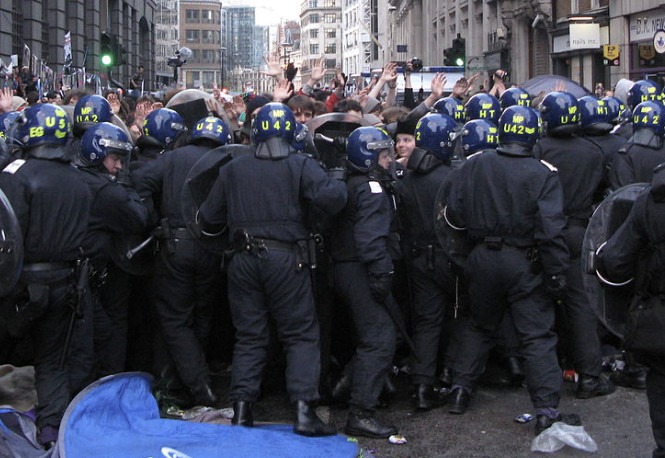
There is no better example to refer to than the Southport stabbings in July 2024. Very rapidly following the attack, social media posts circulated incorrectly theorising that the culprit was an asylum seeker, along with rumours that he was Muslim. Riots later broke out during a vigil for the victims, with violence directed at a nearby mosque as well as at police.
Later, the Crown Prosecution Service was alleged to have prevented police from publicly releasing information that may have prevented the riots. The information alleged to have been suppressed was evidence of the perpetrator’s terrorist views and possession of an al-Qaeda training manual.
It seems extremely unlikely that the riots, fuelled by far-right and anti-immigration sentiment, would have instead chosen peace had this information concerning Islamic views been revealed, given that a mosque was already their chosen target. Instead, the effect of the suppression of information was to spawn sentiment that the police and other institutions are not to be trusted to report the truth.
Increased distrust and suspicion of authorities regarding the perpetrators of horrific crimes was fuelled further by the so-called ‘grooming gangs’ scandal in June of this year, where it was revealed in a report by Baroness Louise Casey that the ethnicity of grooming gang members had been “shied away from” by police, for fear of appearing racist. The report also stated that ethnicity data had not been recorded for two-thirds of grooming gang perpetrators.
Asylum seekers too have the right not to be unfairly demonised and persecuted by the media
In the face of this public distrust, police non-disclosure of suspect ethnicities would only fuel misinformation in the social media sphere. On the other hand, revealing suspect identities would result either in disinterest in the case of a white British perpetrator or national scrutiny in the case of a non-white perpetrator.
Public frustration and distrust of the police, in particular, was further exacerbated when news broke that the Huntingdon stabbing perpetrator may have been involved in two further stabbings earlier that same day. The picture communicated to the general public was one of incompetence and helplessness in the face of violent individuals, who are somehow able to run free for entire days, killing and injuring people along the way.
Scrutiny and holding institutions to account are, of course, necessary in a healthy democratic society, and sympathy is worth giving to those who feel let down by those institutions that are supposed to be in place to protect them, but that is a right equally owed to all residents of this country. Asylum seekers too have the right not to be unfairly demonised and persecuted by the media that covers violent crime.
The direct consequence of the Southport riots was a Law Commission ruling that police are now permitted, and in some cases even obliged, to reveal the ethnicities, immigration statuses, and religions of suspects in custody. This then takes us back to the Huntingdon stabbings, where the above ruling, alongside police guidance released in August, forced the hand of the police into revealing the ethnicity of the suspects.
While violent crime, and particularly homicide, have notably decreased over the last 20 years, with immigration steadily increasing, much of the news does not reflect this fact
The new guidance requiring police to release the identities of criminal suspects largely arose from a desire to prevent the kind of far-right conspiracy theorising and misinformation that caused the Southport riots. However, there is concern that the move will further enshrine in the view of the public the indistinguishable relationship between identities and violence.
As news stories of non-white crime continue to be disproportionately projected while ignoring socio-political nuances, the public’s understandings of the differences between violence and identity will continue to converge to the point of invisibility. While violent crime, and particularly homicide, have notably decreased over the last 20 years, with immigration steadily increasing, much of the news does not reflect this fact.
A society with an understanding of violence as racial will undoubtedly result in a society with an endemic issue of racial violence
Notably, the Liverpool crowd attack in May, where a man intentionally drove a car into a crowd of people, did not receive this scale of national outcry, despite injuring more than 100 people, including eight children. The perpetrator of that crime was a white man.
A society with an understanding of violence as racial will undoubtedly result in a society with an endemic issue of racial violence. The thread of causality runs through these events from beginning to end.
The Law Commission ruling mentioned above, in conjunction with the police’s own new guidance, now makes it a permanent policy to reveal the ethnicities, immigration statuses, and religions of suspects immediately after arrest. This amendment to police policy suggests an expectation on the part of the police of more cases such as Southport and Huntingdon, continuing the trend of the last few years.
Train staff on the Doncaster to London King’s Cross LNER service, where the stabbings took place, have been commended for their bravery in protecting passengers from harm, especially Samir Zitouni, who saved many lives at the cost of serious personal injury.
It is very telling that stories of immense bravery and virtue on the part of ethnic minorities, despite gaining some headlines here and there, are routinely downplayed in favour of a greater narrative of violence and suspicion. Tales of success, tales of effective integration on the part of immigrants, all slip under the radar, never to be seen again.
The positive coverage that has long been owed to the immigrant population of this country must now begin to materialise. Left unabated, the negative public connotations attached to immigrants and asylum seekers will inevitably result in increased racial violence, first rhetorical and then physical. For the time being, we remain in the former.
Comments