The festive season in the sun: Christmas on the Costa del Sol
Christmas along Spain’s Costa del Sol looks quite different to the festive season back in the UK. The main difference is that I can leave my apartment without a jacket to visit the Christmas markets – something utterly unthinkable back home.
That being said, if you ignore the blazing sun, the lead-up to Christmas in Spain is not too dissimilar to the events in the UK. There are plenty of Christmas markets to visit, and colourful, twinkling lights line the streets in both countries.
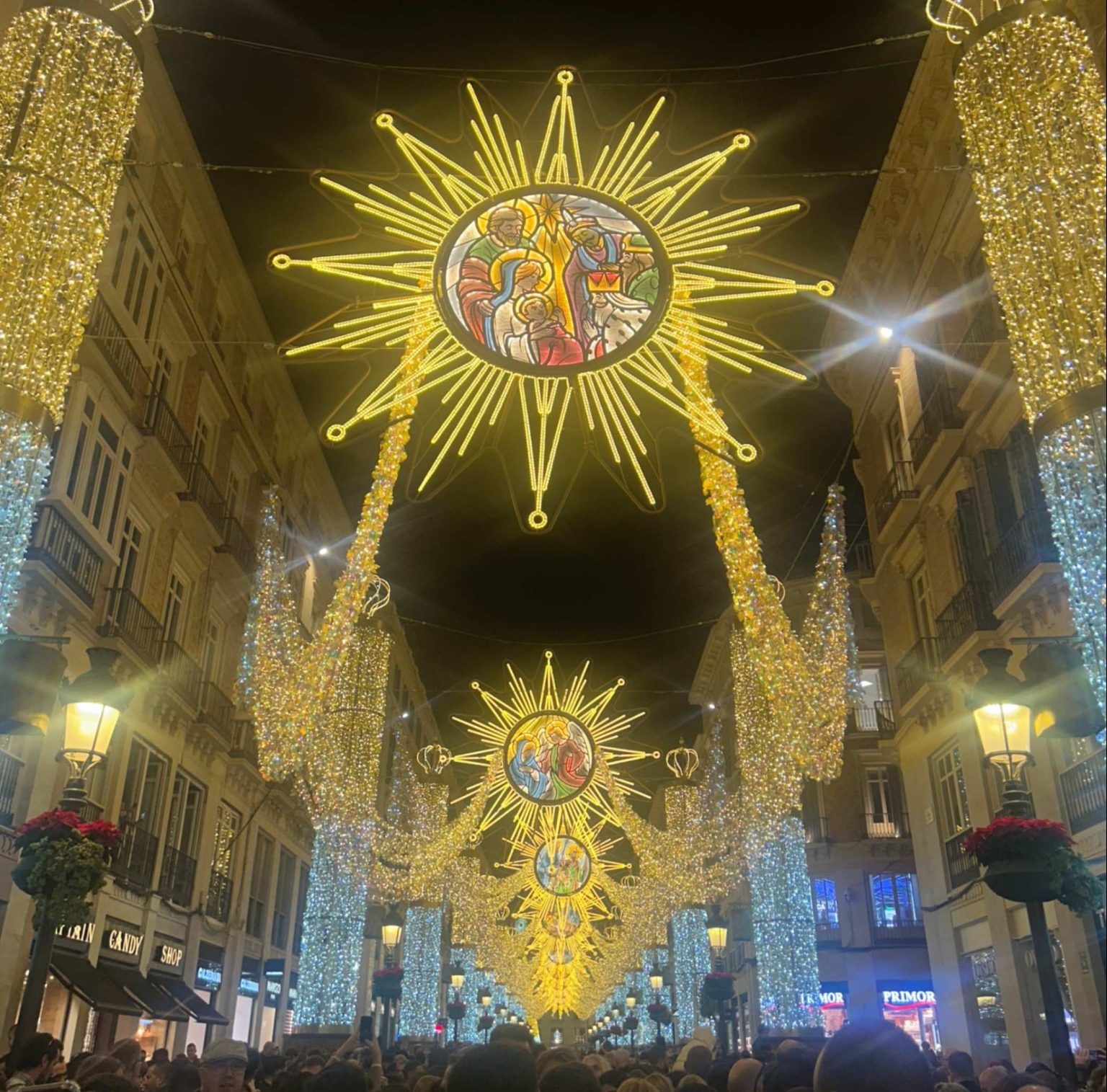
Given that I had the privilege to experience Málaga’s light show, I can confirm that it is worth the trip!
Light shows are prominent on the Costa del Sol. Every small town to the largest cities will have some form of Christmas light show, something unthinkable in my small town back home near Liverpool, where the same light-up snowman is displayed every year, which, quite frankly, looks like it’s melting.
In Marbella, where I have spent the first few months of my year abroad, there is a light show in the main square of the Old Town, which plays three times a night. The best thing about them is that they are completely free to watch. Málaga, just an hour up the coast from Marbella, is also famed for being home to some of the best Christmas lights in the country. Given that I had the privilege to experience Málaga’s light show, I can confirm that it is worth the trip! My main advice, however, is to get there early, as the competition to get a good view of the show is about as competitive as getting tickets for the Eras Tour.
The religious aspect is certainly not lost in the Christmas festivities in Spain either. While you can spend Christmas in the UK, not even noting the fact that it is a religious holiday, religion is at the forefront of the Spanish festivities. Most churches and establishments will display a nativity scene, known as ‘Belénes’. Some are quite impressive, with interactive features, such as running water or flickering lights. Indeed, one of the most popular activities for families during the holiday period is to try and find all the ‘Belénes’ in their town.
The lead-up to Christmas may be similar in the UK and Spain, but the days surrounding Christmas look different. In fact, there is barely a celebration on 25 December at all, rather 6 January is the most important day in the festive period on the Spanish coast.
But before we discuss Christmas traditions, El Gordo, or Spain’s Christmas lottery, must be mentioned. With a whopping top prize of €4.000.000 and many smaller jackpot prizes, it is no wonder that most of Spain’s adult population gets involved. Families, friends, and neighbours split the cost of the €200 ticket to invest in a ‘decimo’, which is a tenth of a ticket. The 5-hour-long celebration is Spain’s biggest TV event of the year, bringing in millions of viewers each year on 22 December.
Due to the Costa del Sol’s coastal location, many of the feasts in the area will consist of seafood. To satisfy those sweet cravings, polvorones de almendra, or almond-based biscuits, and turrón will always be on the table for dessert
Moreover, Christmas dinner is not eaten on 25 December, but rather on the 24th. On Christmas Eve, or Nochebuena, Spaniards set their tables for the biggest feast of the festive season. Given Spain’s rich culinary heritage, it is no surprise that the Nochebuena feast is a large affair. Typically consisting of four courses, families come together to eat delicious food, sing-along to songs, and bring out their competitive side in games. Due to the Costa del Sol’s coastal location, many of the feasts in the area will consist of seafood. To satisfy those sweet cravings, polvorones de almendra, or almond-based biscuits, and turrón will always be on the table for dessert. The meal can last for hours, but it is a staple in the Spanish Christmas calendar.
Furthermore, while 6 January typically marks the day that people take their Christmas decorations down in the UK, it is quite the opposite in Spain. 6 January is one of the most important days in the Spanish festive season, particularly for children.
Spanish children do not address their letters to Father Christmas (although he is starting to become more popular!); they write to Melchior, Gaspar, and Balthazar, or the Three Kings.
The Three Kings parade through towns on floats and throw out hundreds of kilos of sweets to the children who gather on the streets
El Día de los Reyes Magos (Three Kings’ Day) is the time when gift-giving takes place in Spain. Most children will hope for all the gifts on their list, but some will receive a piece of carbón dulce, or sweet coal, if they have misbehaved.
On the evening before the big day, la Cabalgata de los Reyes Magos (Three Kings’ Parade) will occur on streets up and down the country. The Three Kings parade through towns on floats and throw out hundreds of kilos of sweets to the children who gather on the streets. The top tip that I received is to arrive early to get a good view, as it can get crowded.
While the main events of Christmas along the Costa del Sol may lack the frosty weather and the thick, light-up, colourful jumpers, the central importance of spending time with family and friends is the same in both the UK and along the Spanish coast. Ultimately, this emphasises how the celebration is shaped more by the people and the time that you have together, whether this is under palm trees or persistent drizzle. Even though I do love the celebrations in Britain during the festive season, it was nice to be able to experience some sun while strolling through the Christmas markets!
Comments