The best summer ever? What it’s really like working at a summer camp
Let’s face it, we’ve all seen at least one movie about an American summer camp. Whether it’s Friday the 13th or Camp Rock, the summer camp seems to be a staple setting for classic, feel-good coming-of-age films; sunny days packed with sports, music and friendship. And hopefully no slashers. But what happens when you decide to test the theory and sign up to work at one of these places?
For me, the decision came easily. As a language student, I receive a lot of targeted social media ads for companies offering to help you to get a job overseas. One that kept popping up was something called ‘Camp Canada’, who make a wonderful job of marketing the alternative Canadian summer camp experience, and the opportunities to travel that come after. TikToks and testimonials from satisfied counsellors, showing beautiful scenery and the life-changing effects of a summer spent at camp are plastered across their Instagram. Enticed by this and emboldened by the success of my then-ongoing year abroad, I took the leap.
Camp Canada’s job is basically to whisk you through the application process; forms, personal statements, interviews and then the tense wait to see if any camps are interested in hiring you (placements are not guaranteed), it all blurs together until you’re sitting on the plane. And so there I was, on my eight-hour, middle-seat Air Transat flight to Toronto. My first foray outside of Europe. I’d been hired by one of the bigger, more expensive camps in Ontario in a hybrid role: I would be one of three counsellors responsible for a cabin of 9 kids, and a drum teacher in the camp’s music program. One of the many international staff who, I quickly learned, are pretty vital to the camp’s survival.
You’re given some basic safeguarding and first aid training, told what do to in order to not get fired, and away you go
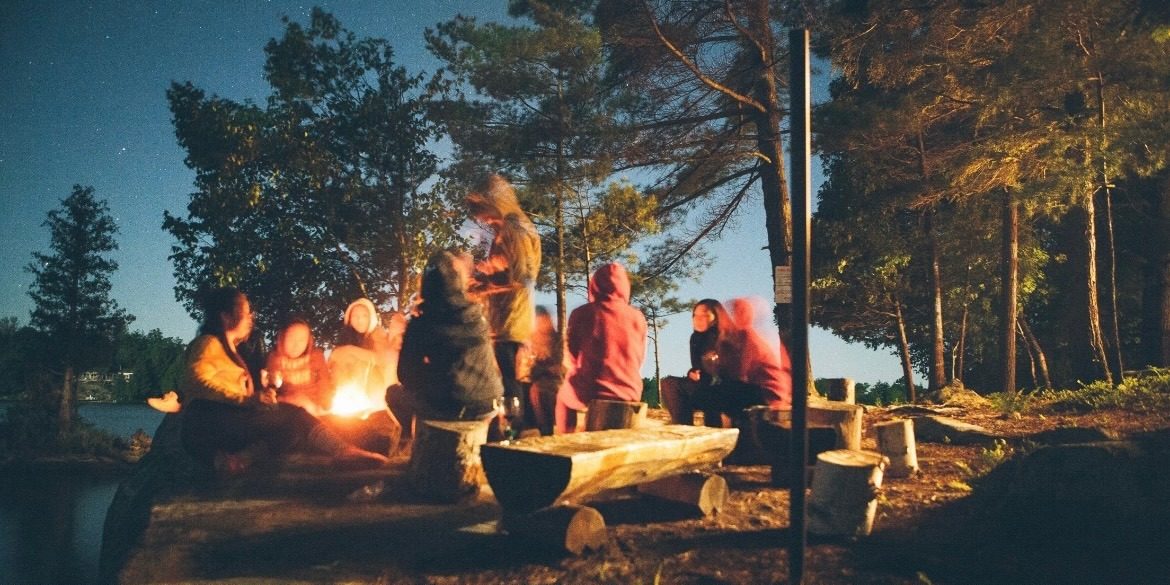
If you’ve never been before, the camp lifestyle takes a lot of getting used to. The cabins are comfortable enough, but are very basic and lack privacy, and though I appreciate the near-impossible task of feeding 500 kids and 250 staff three times a day, the standard of the food, and the chaos of mealtimes in the dining hall left me missing home. Days follow a strict timetable, one which took me right back to school. It won’t come as a surprise either that kids, especially rich ones, can be a challenge to deal with. You’re given some basic safeguarding and first aid training, told what do to in order to not get fired, and away you go. The rest you learn on the job, which can feel overwhelming at first. You get one day off per week which was spent either doing our own thing around camp or in the charming local town of Parry Sound, where there was a Walmart for much-needed supplies (extra strength bug spray usually!) There’s also the concept of being “on duty”, where one counsellor for every few cabins stays behind after lights-out while the rest of the staff enjoy their evening free time. This often involves encounters with racoons, skunks and endless mosquitos. Other than that, camp life becomes a rhythm. Get the kids out of bed and to breakfast, off to activities, which, for me at least, meant several hours of drum tuition per day, breaks for lunch and dinner, then staff-organised games in the evening, an opportunity for us to introduce the kids to some British playground classics. The only exception was World Games, effectively a camp Olympics at the end of the summer, with the whole camp split into two teams, a random country each. The triumph of my team, Costa Rica, was one of the better moments.
It’s just that working there is not as universally easy and fun as it’s made out. It’s still a wonderful experience, but I’m happy enough to have only done it once
In any case, it’s a lot to deal with. The behaviour of our kids (aged 10-11) did become less of an issue as we did our best to gain their respect, and my homesickness passed, but I never truly felt settled at the camp. I wasn’t miserable, but I didn’t exactly come out of my shell. The Canadian reputation for being polite, welcoming and helpful is very well-founded, but the endless enthusiasm began to grate on me. That, I think, is the essence of the problem for me. I felt grumpy and boring for not going along with it at all times. The staff, like Camp Canada, were at pains to remind us all that this was the best summer ever, but as the summer went on, it felt increasingly like the strategy was to convince the kids of this, so that they would want to come back next year. The camp is, after all, a business.
I want to stress that this article is not intended to lambast the camp, or the experience as a whole; I can absolutely see the appeal. I had plenty of good days and met some wonderful people from all over the world. The truth is just that it takes a specific type of person to thrive in that environment. A person more confident and outgoing than me. Or someone who, like the Canadian staff, grew to love it over several years there as a child. It’s not that I don’t recommend it, plenty of people love it dearly and spend all year waiting to go back. It’s just that working there is not as universally easy and fun as it’s made out. It’s still a wonderful experience, but I’m happy enough to have only done it once.
Comments (1)
Absolutely agree with all of this! I worked at the same camp and was only there for a short amount of time due to personal reasons, but as one of the few international staff there and it also being my second time abroad, it was definitely a lot more stressful and emotionally trying than I had expected it to be.