Language learning at ‘breaking point’ as Nottingham cuts signal wider MFL freefall
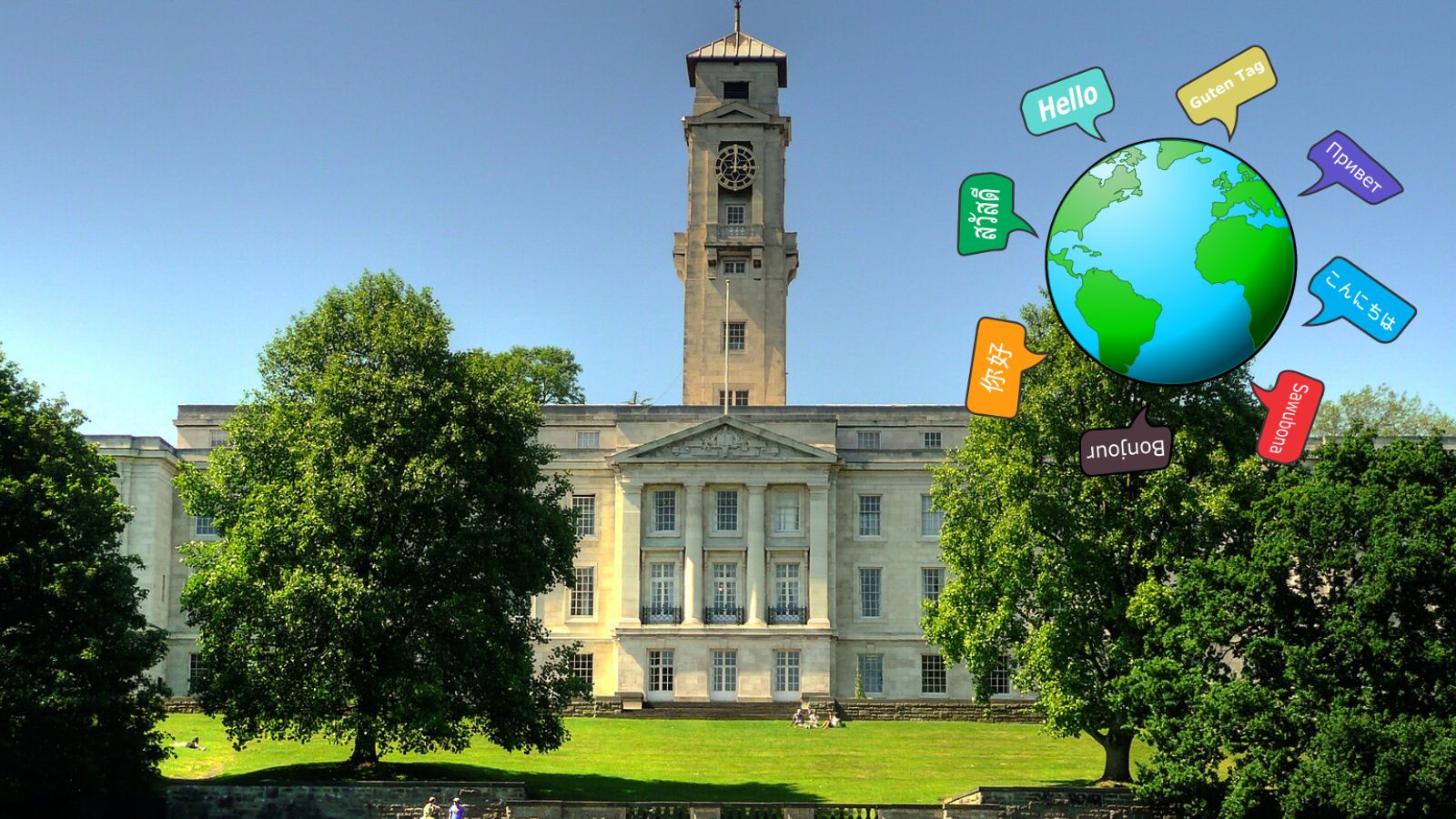
On 6 November, the University of Nottingham announced that they would be suspending 46 courses for the 2026/2027 academic year, including all modern languages and music courses.
A spokesperson from the University of Nottingham stated: “Ahead of these proposals being put forward to the university’s council later this month, we have taken the decision to suspend a small number of courses where demand is low or where they are not meeting the benchmark against a number of other criteria.”
Unsurprisingly, the university has received much backlash over the decision, not just from students and academics at Nottingham, but also from linguists, musicians, and champions of education in general.
Approximately 17,000 academics, students, and campaigners have signed a petition opposing the cuts, arguing that they would lead to the East Midlands becoming a ‘linguistic desert’ as the area would no longer have a higher education facility that offers modern languages.
However, the University of Nottingham’s recent decision reflects an unfortunate truth: the take-up of modern languages by students at GCSE level and beyond is drastically falling.
A recent report by the Higher Education Policy Institute found only 3% of A Levels taken in the UK in 2024 were in modern foreign languages, classical languages, Welsh, and Irish
Since the requirement for students to study a language at GCSE level was scrapped in 2004, there has been a significant drop in modern language GCSE entries from approximately 500,000 to 300,000.
Likewise, a similar trend has been noticed in the number of A Level entries. A recent report by the Higher Education Policy Institute (HEPI) found only 3% of A Levels taken in the UK in 2024 were in modern foreign languages, classical languages, Welsh, and Irish.
Intake at universities for courses in language and area studies has equally been on a downward trajectory over the past five years, with the 2023/2024 academic year’s enrolment of 63,260 undergraduates down 20% on figures in 2019/2020.
The dramatic decline in the uptake of language qualifications can be explained by two key factors: the push of STEM subjects and an overreliance on Google Translate and AI, which has forced many to think that studying a language will just be rendered obsolete in a modern world.
As neighbours, it is important we know and understand each other. Language is a powerful tool to sustain our close ties
French Embassy spokesperson
However, it is quite the opposite. Languages students gain invaluable critical thinking skills and cultural awareness through their studies. A spokesperson for the French Embassy stressed that: “As neighbours, it is important we know and understand each other. Language is a powerful tool to sustain our close ties.”
Vicky Gough, Schools Adviser at the British Council, labelled the drop in modern foreign language A Level entries as “of a serious national concern.” However, adding to this, she stated: “This doesn’t necessarily show a lack of interest in languages but reveals a lack of equal access to language education.”
Gough’s statement is evidenced by the HEPI report, which reveals that a third of state-sixth forms in England do not have a single pupil studying French, Spanish, or German, according to data from A Level exam entries last year. A shortage of both demand and teachers has led to many sixth forms being unable to offer such language courses.
It does not seem as though the government are aiding the decline in the uptake of languages either. The recent decision by the Education Secretary, Bridget Phillipson, to remove the requirement to study a set number of academically rigorous subjects, known as the EBacc, will most likely result in a decrease of students studying both languages and humanities.
Language holds so much power, and without the ability to communicate, we will lose our opportunity to broker peace and gain a future that looks more positive
Beth, French and English Literature student
The rapid decline of language learning and the decision by Nottingham to suspend their language courses – the first Russell Group university to do so – have also affected Warwick’s languages students, who now see their degree as being devalued by an institution in a society where global connections and languages are vital.
Beth, a French and English Literature student, expressed her concern about the possibility that future generations may not be able to achieve the level of intercultural awareness that can be gained through language learning.
She said: “Language holds so much power, and without the ability to communicate, we will lose our opportunity to broker peace and gain a future that looks more positive. I believe we now find ourselves in a crisis where modern languages are about to reach a breaking point because of this continual trend of devaluing a critical skill.”
In a global society, communication is key. Without encouraging students to take up a language, we are losing one of the foundations that allows us to participate in today’s world effectively. Changes must be made to ensure that languages are once again perceived as an integral skill.
A petition organised by Nottingham students against the long-term proposed cuts at the university can be viewed here.
Comments