Hanging on to cliffhangers
To have approached television in any capacity is to have approached the cliffhanger – those dramatic and exciting hooks that grip us in their suspense and anticipation. The cliffhanger engrosses our attention. Television would not be the same without the cliffhanger. It is the key to its emotional experience, its fundamental goal.
The ‘Good’ Cliffhanger
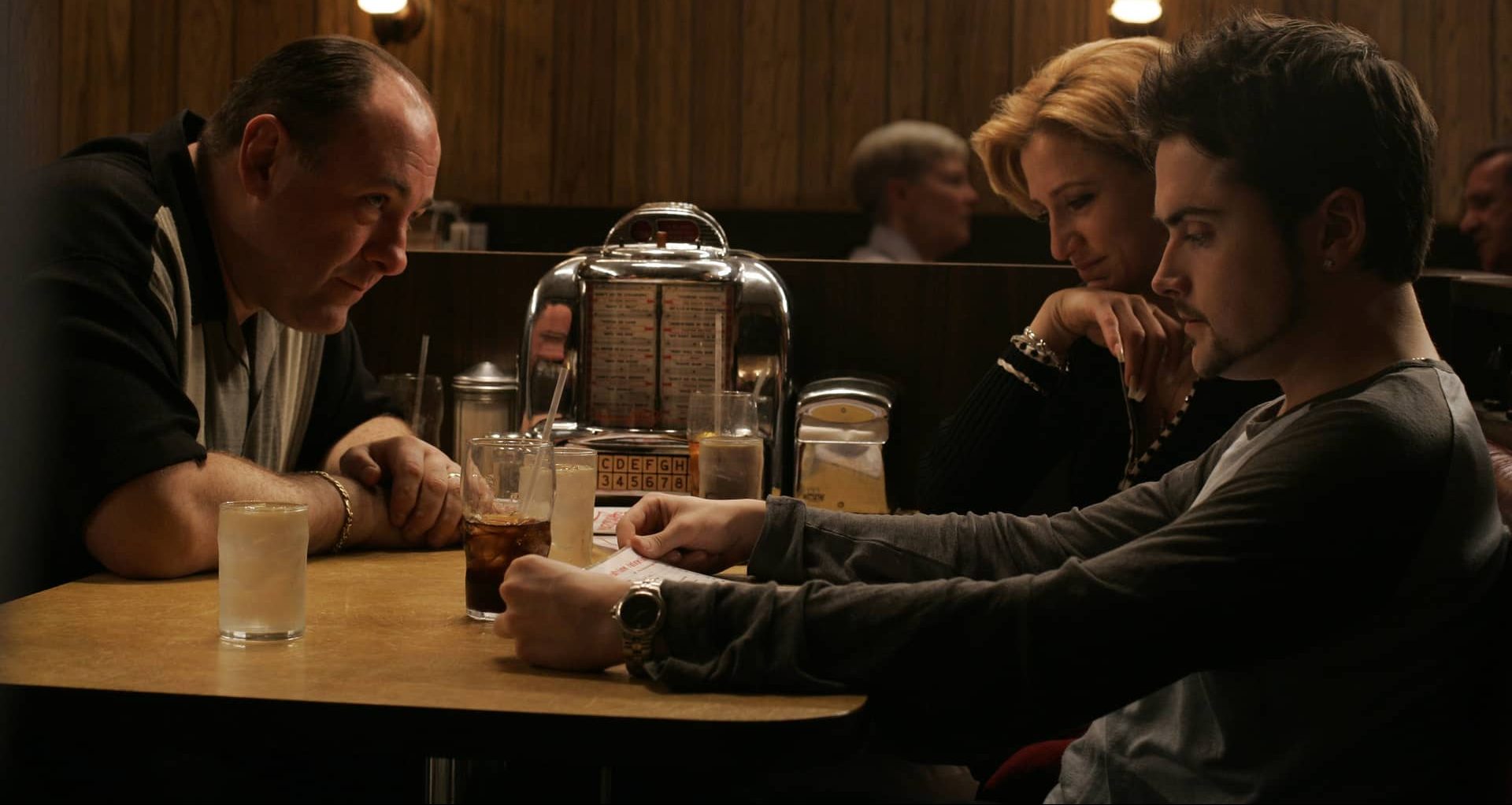
Perhaps to impose a definite ‘good’ on the subjective realm of TV is presumptuous, yet there are certainly several aspects that enable the cliffhanger to achieve its emotional heights. The first one is the most important: a substantiated set-up. The cliffhanger is the key to television’s emotional experience, and for emotional experience, one needs a significant time investment. The best example of this, and of a cliffhanger in general, is in The Sopranos’ season finale, ‘Made in America.’
We arrive here after 86 hour-long episodes, six seasons, and, therefore, a strong attachment, however morally tangled, to Tony Soprano, the season’s leading and central character. The final scene, set in an ordinary, busy diner, and accompanied by Journey’s ‘Don’t Stop Believing’, focuses merely on Tony and his family, who arrive one by one, preparing to order a meal. The scene builds an uncomfortable tension, panning to seemingly irrelevant, yet oddly suspicious, background figures. All this unease is rewarded with no resolution, the scene ending on Tony looking up as the diner’s doorbell rings, the lyrics cutoff at “Don’t Stop-”, before the screen abruptly turns to black.
This cliffhanger is inimitable, providing no clear answers
This cliffhanger is inimitable, providing no clear answers. Audiences are still engrossed today, continuously theorising Tony’s fate after the sudden cut to black.
This lack of an instant, fixed solution can frustrate audiences, and some, evident in the original airing of ‘Made in America,’ see such irresolute cliffhangers as betraying them and their emotional dedication to a show. These critiques ignore the second aspect of a good cliffhanger, however: the importance of emotional reaction. For art to evoke something within the individual, is for it be successful.
So, for a cliffhanger to invoke audiences to feel such strong emotions, like frustration, betrayal, and longing, is to have achieved its aim: that emotional experience of which all television attempts to achieve. This aspect of good cliffhangers is usually adopted by any exercise of the narrative device, because it is such an effective and easy way to hold an audience’s attention. However, emotion can be cheap, and many cliffhangers, as I shall discuss, fail to combine these two aspects effectively and thus deny a deeper, conscious experience of emotion.
The ‘cheap’ cliffhanger
Dislike of the cliffhanger stems largely from what I define as the ‘cheap’ cliffhanger. The cheapening of the cliffhanger is not a simple reversal of the aspects that make one ‘good,’ and instead tends to fulfil one and disparage the other. Emotions can be cheap, so can be used easily by shows to evoke similarly cheap reactions, in other words, mere ‘shock value.’
For this I look towards the Game of Thrones episode, ‘Mother’s Mercy.’ Here, Jon Snow is killed. The setup towards his death was fairly substantiated, through political conflict in the Night’s Watch, and the act itself is emotionally gripping. So why is this ‘cheap’?
A substantiated set-up is important for the creation of a good cliffhanger
A substantiated set-up is important for the creation of a good cliffhanger, but it must continue past the event with meaningful narrative significance to remain good. ‘Mother’s Mercy’ does not achieve this. Jon’s death does not matter; he is resurrected merely two episodes later. The death not only lacked any further insight into Jon himself, but also failed to expand the plot in general, something inexcusable for a narrative-driven show.
Compare this to another cliffhanger of The Sopranos, in the first episode of season six, ‘Member’s Only.’ The episode ends with Tony being shot by his uncle, whose mental competency has been deteriorating over the past two seasons or so. Tony lies on the floor, on the brink of death, just like Jon Snow, the screen fading to black.
In the episodes following, Tony remains critically injured in hospital, his recovery in constant jeopardy. He experiences surreal dreams as a Mr. Kevin Finnerty and wakes from a coma with a new, albeit fleeting, value of life. Afterwards, however, he returns to his lifestyle as a mafia boss, indulging in all the murder, the extortion, the sexual exploitation, the pitiful power struggles.
A good cliffhanger engrosses any audience
This, unlike Game of Thrones, achieves a good cliffhanger by setting up appropriate and substantiated reasons for the event (the mental uncertainty of Uncle Junior), by delivering a powerful emotional moment (the potential death of the series’ leading character), and by developing upon the event itself, by providing audiences insight into the true nature of Tony Soprano. Jon Snow, on the other hand, is used for mere spectacle, his death having little to no impact on the subsequent plot or his character as a whole.
Conclusions
The cliffhanger, when done properly through set-up, development, and emotional punch, is essential to television. Whilst viewers may criticise cliffhangers, this is not the fault of the device itself, but rather a cheapening of it. A good cliffhanger engrosses any audience.
Comments