How the Chicago Boys’ neoliberal experiment reshaped Chile
The Chicago Boys’ reshaping of the Chilean economy under the military dictatorship of Augusto Pinochet was part of a wider US effort to counter left-wing tendencies in Latin America during the Cold War.
Their role in the Chilean government began in a Cold War partnership between the University of Chicago and Pontificia Universidad Católica de Chile in Santiago, supported by the US government. As part of this project, 26 Chilean students were educated at the University of Chicago under Milton Friedman and Arnold Harberger, and were exposed to their pro-market neoliberal views.
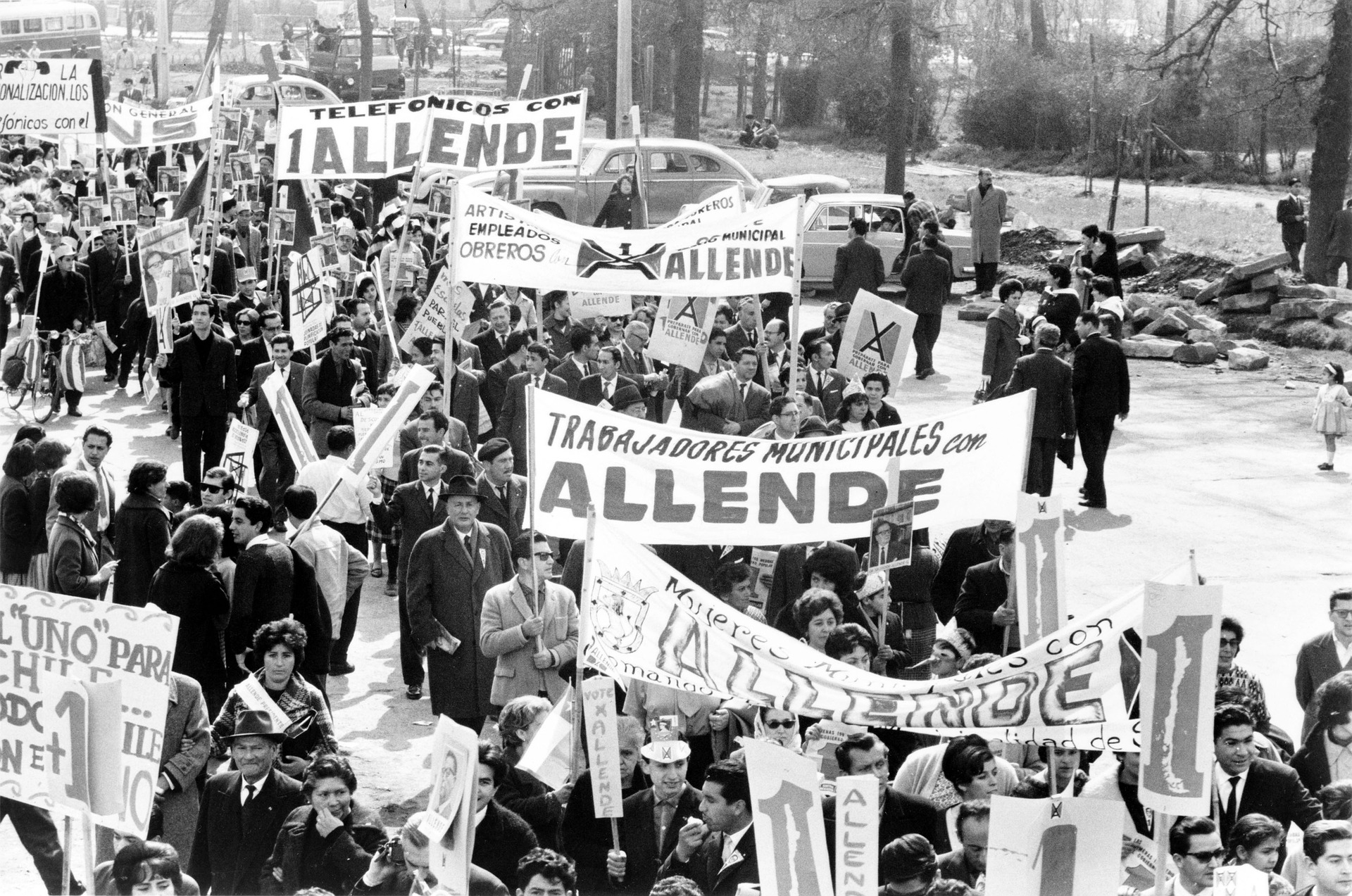
At this time, Salvatore Allende, a lifelong Marxist who was elected in 1970, was the President of Chile. Allende’s government introduced socialist policies such as the nationalisation of the copper mines, the expansion of workers’ control over factories, the redistribution of land, and increased social spending. These policies translated into a 35% reduction in wages and a 700% rate of inflation.
The Chicago Boys achieved their intended effects on growth, with GDP growing at an annual rate of 2.9% during Pinochet’s regime
The US government under Nixon was highly concerned about Allende’s socialist agenda and, alongside the CIA, sought to destabilise the Chilean economy. The CIA provided financial support to right-wing Chilean parties and media outlets, whilst Washington cut off economic aid and pressured the World Bank and International Monetary Fund to do the same. It was revealed in congressional hearings decades later that between 1970 and 1973, the US spent over $8 million to destabilise Allende’s government: the equivalent of $60 million today.
The intervention of the US, as well as discontent within Chile, led to a successful coup in 1973, in which General Augusto Pinochet took control of Chile. Under Pinochet, the Chicago Boys were given key positions in government, and tasked with repairing the damage to the Chilean economy caused by Allende.
They achieved this through a complete restructuring of the Chilean economy in an attempt to fight high inflation with a “shock treatment,” which they believed would temporarily cause high unemployment but would put the country on a more stable, secure economic path.
The Chicago Boys implemented large cuts in public spending and investment, leading to a 28% decline in industrial production in 1975 and a 12.9% fall in GDP. The government then liberalised prices, lowered customs fees from a maximum of 94% to a blanket 10%, cut taxes, and limited unionisation.
They also implemented a complete shift towards the market, asserting that the state should not provide any services that the market could address. Education, social services, and healthcare were privatised, as well as 95% of public companies, transferring national assets to allies of the regime at incredibly low prices. This enabled Chilean elites and Pinochet’s allies to limit market competition and secure monopolies, leading to huge wealth inequalities.
Their reliance on the market continued even during the Latin American debt crisis of 1981, during which their complete faith in their neoliberal ideology led to a ‘do-nothing’ policy, leading to a fall in GDP by 15%, unemployment rising to above 30%, the Central Bank losing half of its international reserves and the worst recession in Chile since the Great Depression.
The Chicago Boys achieved their intended effects on growth, with GDP growing at an annual rate of 2.9% during Pinochet’s regime. This extraordinary economic growth has continued to the present, as GDP has leaped from $14 billion in 1977 to $247 billion in 2017, with Chile named the richest country in Latin America according to the 2024 Prosperity Index.
Their neoliberal policies also laid solid foundations for post-Pinochet democratic governments to build upon. Combining these economic foundations with free trade agreements and tax increases to fund social spending led to 7.1% GDP growth, a fall in inflation to 11.7%, and a drop in unemployment to 7%, while poverty decreased to 8.6% in 2017.
The richest 1% of Chileans account for 28.1% of total income; this makes Chile the third most unequal country in the world
However, during Pinochet’s regime, annual inflation was 79.9%, unemployment averaged 18%, poverty was 68% and the GINI inequality index was 0.57, one of the highest in the world. This incredibly high inequality persists today.
According to the World Inequality Database, the richest 1% of Chileans account for 28.1% of total income; this makes Chile the third most unequal country in the world.
The legacy of the Chicago Boys remains prevalent in Chile today, as shown by protests in October 2019, sparked by a 30-peso increase in metro fares but protesting wider issues of inequality and poverty. Protestors directly attributed the high wealth inequalities within Chile to the Chicago Boys, for example, a spray-painted slogan near the now-renamed Dignity Plaza suggested: “Neoliberalism was born and will die in Chile.”
These protests also led to the creation of the Constitutional Council of Chile, intended to change the Constitution of 1980, drafted by Pinochet and the Chicago Boys. Despite multiple drafts of a new constitution being rejected, the debates surrounding Chile’s constitution highlight the significant legacy of the Chicago Boys, particularly regarding the country’s huge wealth inequality.
Comments