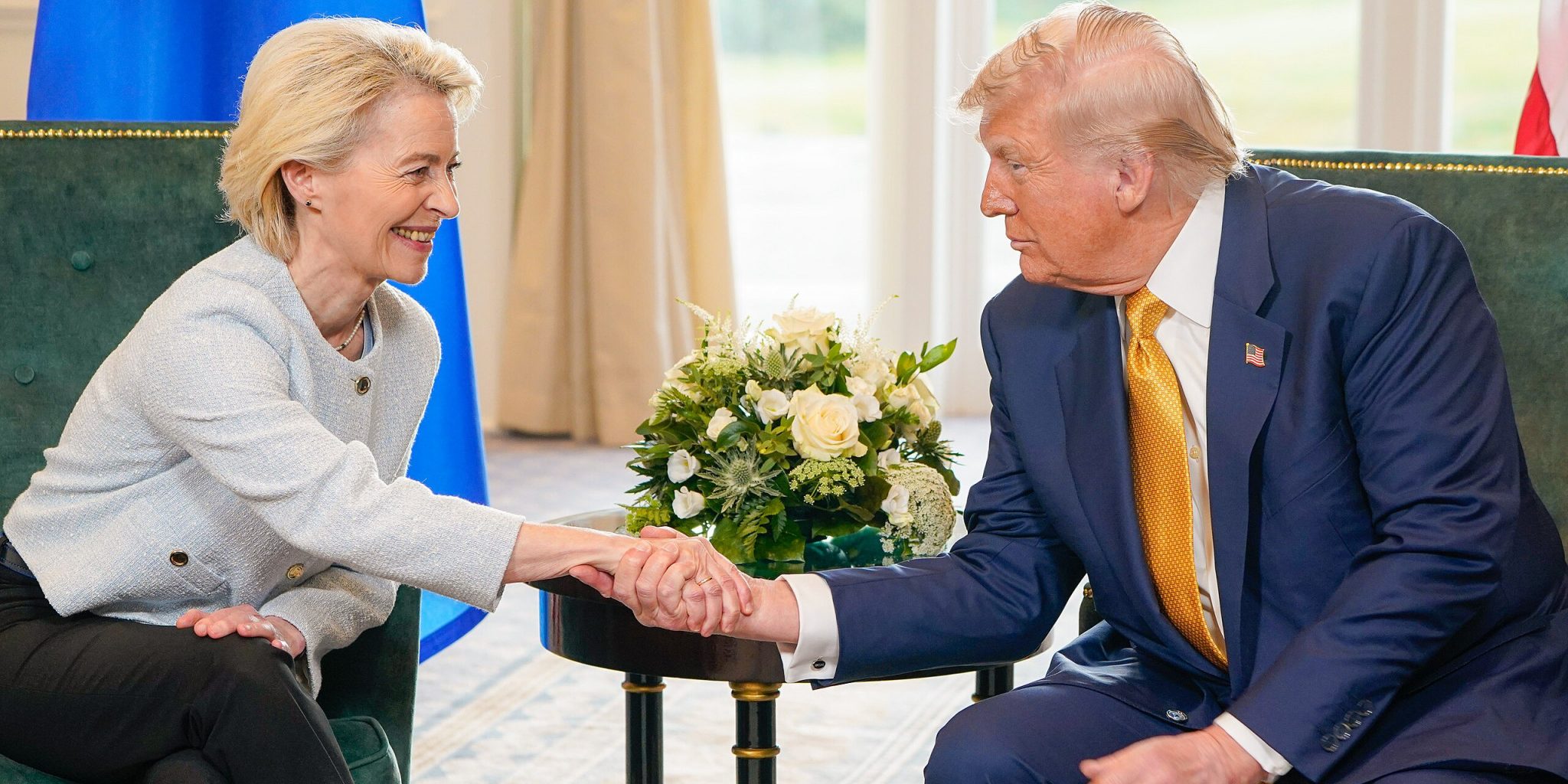
A promise to deceive: US commitment to interference in Europe
Despite American threats in that direction, the United States will never turn its back on Europe for good. Significant US interests lie in the folds of the European continent, and, while those exist, American interest and influence in Europe is guaranteed. In fact, the greater danger is increased US involvement in Europe, with the aim of political interference.
Where Europe and the US are beginning to divide is on the less transactional plane, in the realm of values and principles. The US National Security Strategy (NSS), which is usually published once per presidential term and outlines the American approach to global aims and goals, was released in November and reveals the extent to which US commitment to international ‘freedom’ has eroded.
The strategy discusses Europe in largely economic terms, evaluating the continent on the basis of its reduction in the global share of GDP, and using this to evidence claims that Europe is facing “civilizational erasure” as a result of migration policies. It also makes attempts at delegitimising and destabilising the European Union, accusing it of “undermining political liberty and sovereignty”, and later implying its ineffectiveness and inefficiency by referring to a “failed focus of regulatory suffocation”.
The most important passage in the strategy’s policy on Europe is its commitment to “help Europe correct its current trajectory”. This essentially represents a confession to future political and economic interference in Europe to align it with US interests
Overall, the strategy’s policies on Europe are harshly critical: accusing it of limpness in negotiations with Russia over hostilities in Ukraine, targeting European migration policies, “censorship of free speech and suppression of political opposition”, and weakening economic and military strength.
The most important passage in the strategy’s policy on Europe is its commitment to “help Europe correct its current trajectory”. This essentially represents a confession to future political and economic interference in Europe to align it with US interests, a process which has already begun and can already be observed.
As European Council President António Costa remarked, “What we can’t accept is the threat of interference in European political life. The United States cannot replace European citizens in choosing what the good or the bad parties are”. US interference in Europe usually takes the form of cultivated connections with far-right political parties, such as the AfD in Germany – which German intelligence has classified as extreme right – alongside Nigel Farage and the Reform party here in the UK. The strategy references these parties as “patriotic European parties”, and “encourages (America’s) political allies in Europe to promote this revival of spirit”.
Any US implications towards economic distance from Europe seem more intended as deterrent threats than true commitments to greater isolationism
The US’s willingness to wage economic war against its allies was demonstrated early this year with President Donald Trump’s tariff policies, which saw the US engage in a pitched back-and-forth trade skirmish with its closest ally, Canada. While the return of manufacturing to the US is certainly among President Trump’s long-term goals, the volatile and unpredictable rollout of tariff policies was more likely intended to send a message of a changing US political and economic trajectory, accompanied by the appropriate threats in the case of non-compliance.
All of this is to say that any US implications towards economic distance from Europe seem more intended as deterrent threats than true commitments to greater isolationism. US criticisms of Europe and the European Union represent attempts to destabilise the EU and incentivise US allies in far-right European political parties to further their realignment of Europe with the US, at which point the US will then reward the ‘rehabilitated’ Europe with closer relations and economic ties.
The infiltration of US interests and influence into European political life is a greater threat of “civilizational erasure” than any migration policy. The US betrays its supposed commitment to liberty across the globe through its penetrations and perversions of European democracy; only a very limited selection of flavours of liberty are permitted, and they all taste like nationalism.
One possible way to forcibly reduce external influence in politics through funding would be to introduce a cap on individual private donations to political parties
A universal European commitment to exposing the avenues of US influence over European politics is an absolute necessity, and Europe must make drastic steps to protect itself against foreign interference as much as possible. This should manifest itself in tighter restrictions on the sources of income for European parties and closer scrutiny of the funding of political parties, particularly where their income stems from mysterious offshore backers through the use of tax havens.
Currently, the EU has systems of restriction in place that obligate European political parties to collect full identification information for donations over €3000, which is then published annually. Similarly, the UK’s Political Parties, Elections and Referendums Act (PPERA) obliges all donations above £500 to come from a “permissible” source, which largely means UK-based individuals or entities. Legislation to promote transparency and mitigate foreign intervention does, but naturally, where laws exist, so also do loopholes – and closing these should be a top priority.
One possible way to forcibly reduce external influence in politics through funding would be to introduce a cap on individual private donations to political parties, which currently does not exist in most European countries, nor in political parties in the European Union. It would not only reduce the domestic influence of the wealthy over European politics, but also handcuff political parties whose funding stems from single large overseas sources.
Perhaps a more cynical solution would be to encourage voters to engage slightly more critically with the political content they consume: to question its origin, its purpose, and whichever means enabled its creation. And before you ask, I don’t get paid for this.
Comments