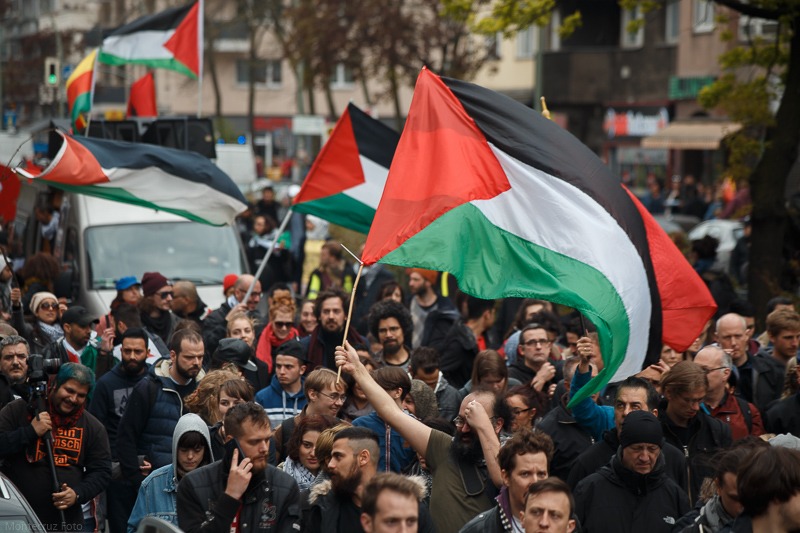
Academics and students most likely group to face ‘repression’ over pro-Palestinian views
Academics and students are more likely to face ‘repression’ for their pro-Palestinian views than any other group of people in the UK, the Index of Repression has found.
The group, which provides legal assistance to people targeted for their pro-Palestinian views, suggested that Palestinian solidarity is being “silenced, criminalised and sanctioned” through smears, disinformation, harassment, doxing, visa cancellations, financial blacklisting, loss of employment, and arrest.
The index, described as the first publicly accessible database of its kind in the UK, was published by the European Legal Support Centre (ELSC) and was collated from a total of 964 verified cases between January 2019 and August 2025.
336 of the verified incidents were in relation to students, academics, writers, and teachers, making them the most affected group. This was followed by activists and organisers, who were the targets of 229 cases.
The predominant mechanism for suppression among this group was censorship, disinformation, and smearing, which formed one third of the incidents identified.
Those affected, such as academics and students, face a three-stage process of repression, according to the group’s findings. This typically involves smear or distortion, institutionalisation, and material enforcement
The index’s website states that the findings reveal a wider structural issue of repression. The group intends to expose “the mechanisms deployed to justify the criminalisation of Palestinians and the solidarity movement, as well as violations of civic freedoms and rights”.
Those affected, such as academics and students, face a three-stage process of repression, according to the group’s findings. This typically involves smear or distortion, institutionalisation, and material enforcement.
The findings also showed many cases where allegations of pro-Palestinian support were first amplified by media outlets or pro-Israel advocacy groups, before being taken up by schools and universities, and then converted into disciplinary or legal punishment.
Academics were found to often experience this process, facing a campaign of smearing and censorship, followed by direct institutional sanctions such as suspensions and investigations.
Students’ unions were also found to have been impacted, as they have faced funding cuts for passing motions that called for their universities to boycott or divest from Israel.
One incident detailed in the database involved a University of Warwick student, who was reported to police by the University in December 2023 and later arrested for holding a sign that compared Israel with Nazi Germany at a Palestine solidarity demonstration
Individuals have also faced repercussions for joining pro-Palestine demonstrations or speaking out about the situation in Gaza.
One incident detailed in the database involved a University of Warwick student, who was reported to police by the University in December 2023 and later arrested for holding a sign that compared Israel with Nazi Germany at a Palestine solidarity demonstration.
After intervention from the ELSC and its legal partners, the police agreed to delete all associated records, revoke the student’s caution, and the University said there would be no further disciplinary action.
The group claimed that the main perpetrators of repression against supporters of Palestine were police and security personnel (listed in 220 incidents), followed by educational institutions (involved in 192 incidents). Pro-Israel advocacy and legal groups were in third place, involved in 141 incidents, while journalists and media actors were involved in 113.
Comments